


Protect Health and Life Insurance During an East Windsor Divorce
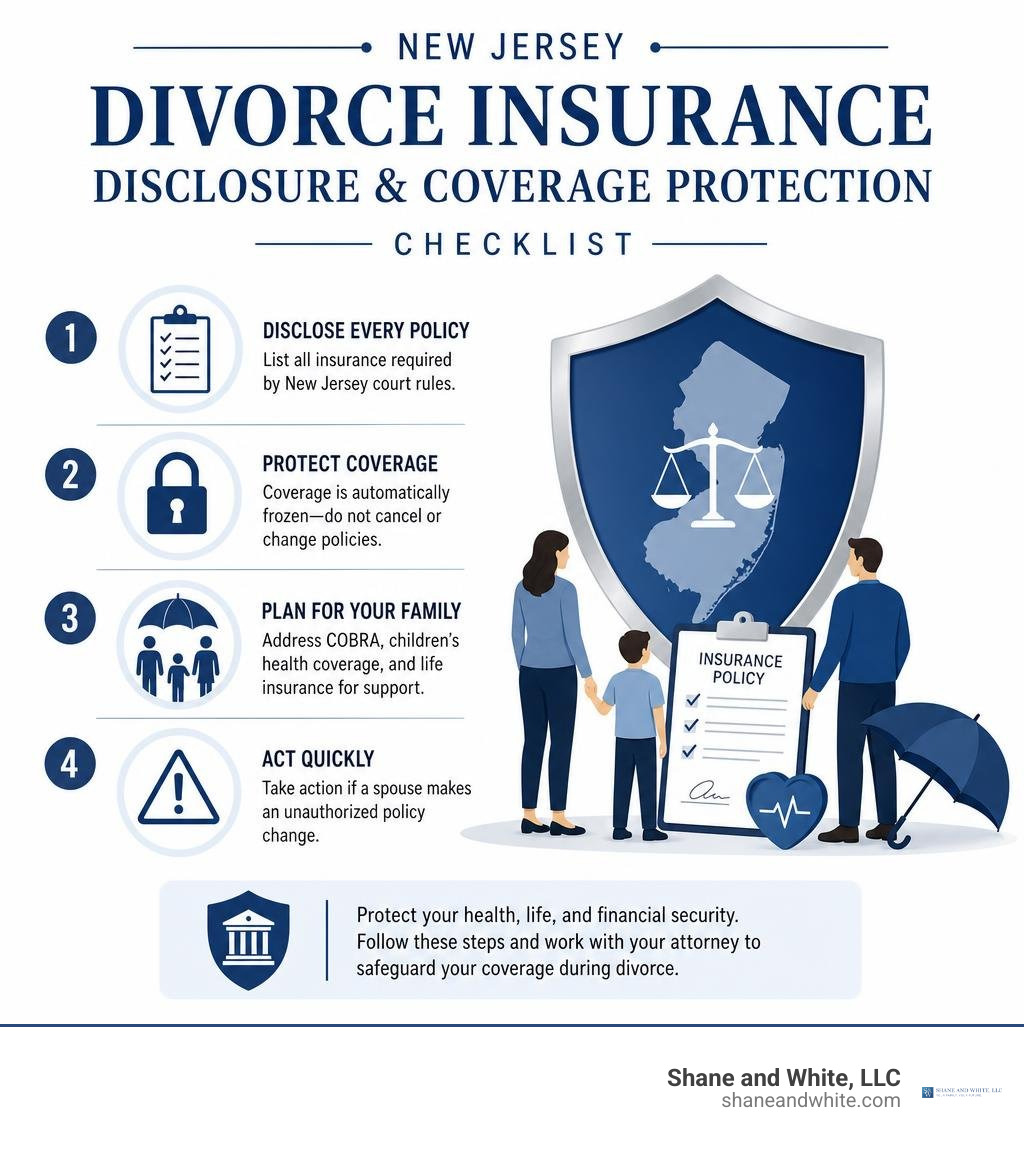
If divorce may affect your health or life insurance, speak with an East Windsor divorce insurance coverage lawyer before you cancel a policy, change a beneficiary, or let coverage lapse. A lawyer can help you:
- Identify and disclose every policy required by New Jersey court rules.
- Protect coverage during the automatic insurance freeze.
- Plan for COBRA, children’s health coverage, and life insurance that secures support.
- Act quickly if a spouse makes an unauthorized policy change.
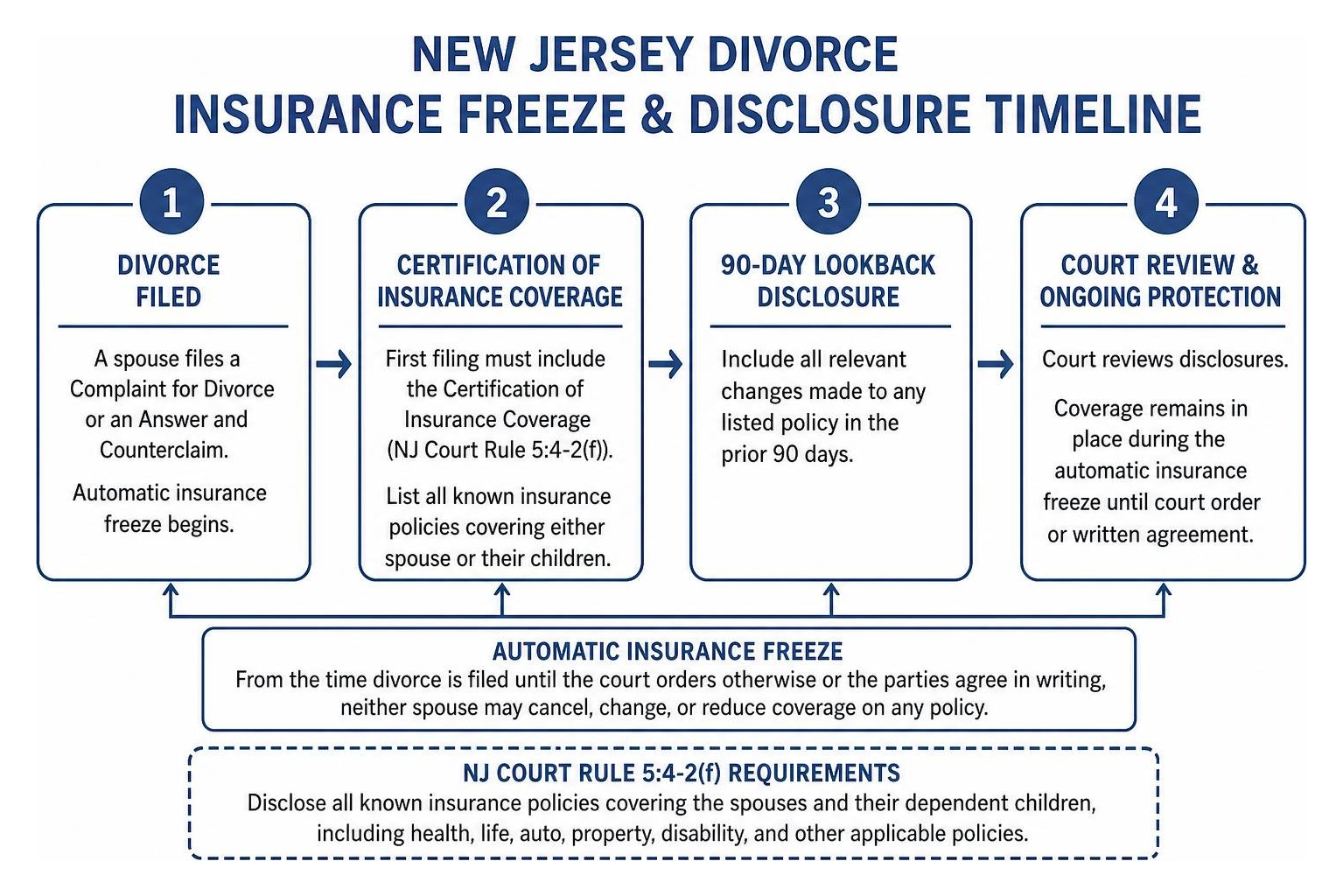
Under New Jersey Court Rule 5:4-2(f), each spouse’s first divorce filing must include a Certification of Insurance Coverage. It generally lists known health, life, auto, property, disability, and other policies covering either spouse or their children, including relevant changes made in the prior 90 days. These details can affect support, property division, and your family’s financial security.
I am Kenneth White, Esq., a Supreme Court of New Jersey Certified Matrimonial Law Attorney with experience serving on family-law committees, early settlement panels, and as a court-appointed mediator and guardian ad litem. As an east windsor divorce insurance coverage lawyer, I use that family-law background to help clients address disclosure duties, coverage risks, and practical settlement protections.
East windsor divorce insurance coverage lawyer helpful reading:
- East Windsor divorce lawyer
- east windsor divorce housing rights lawyer
- east windsor post divorce modification attorney
Mandatory Disclosures and the Automatic Insurance Freeze in New Jersey
When entering the family court system, complete financial transparency is not an optional courtesy—it is a strict legal mandate. Navigating policy disclosures requires understanding what to expect when you are getting a divorce in New Jersey. As outlined under the NJ Divorce: Certification of Insurance Coverage Rules, both parties must formally catalog all active policies that protect the family unit.
This affidavit requirement exists to prevent either party from making rash, vindictive, or panicked decisions that leave the other spouse or children without critical protection. The moment divorce paperwork is initiated, an automatic insurance freeze takes effect across the marital estate, ensuring the status quo remains intact while negotiations proceed.
NJ Court Rule 5:4-2(f) Requirements and the 90-Day Lookback
New Jersey Court Rule 5:4-2(f) mandates that every initial pleading—whether a Complaint for Divorce or an Answer and Counterclaim—must include an affidavit listing all known insurance policies covering the spouses and their dependent children. This requirement extends across several distinct categories:
- Health and Dental Insurance: Comprehensive major medical, prescription coverage, vision, and dental plans.
- Life Insurance: Group term life through an employer, private term policies, whole life, and universal life.
- Vehicular Insurance: Auto, motorcycle, recreational vehicle, and commercial transit policies.
- Property Insurance: Homeowner’s, renter’s, hazard, and flood insurance policies.
- Disability and Umbrella Coverage: Short-term and long-term disability plans, alongside secondary excess liability umbrellas.
Crucially, the rule imposes a mandatory 90-day lookback period. Litigants must disclose any policy that was canceled, modified, or allowed to lapse within the 90 days preceding the initial filing. This lookback catches preemptive cancellations, such as a spouse attempting to drop medical coverage or alter a life insurance beneficiary right before filing for divorce.
Filings are submitted through the New Jersey Judiciary Electronic Document Submission (JEDS) system, creating an immediate, legally binding record of all coverage details, policy numbers, and insured parties.
Remedies When a Spouse Violates the Automatic Policy Freeze
Despite the clear mandates of Rule 5:4-2(f), unauthorized policy changes happen. A spouse might drop a dependent from a health plan or alter life insurance beneficiaries without prior court authorization.
When these violations occur, the non-offending spouse has powerful legal remedies. Our firm files emergency motions under New Jersey Court Rule 1:10-3 to enforce litigant rights and compel immediate compliance. Understanding these remedies is an essential part of the ultimate guide to new jersey divorce laws and process.
Judges in the Mercer County Family Part have broad authority to:
- Order the immediate, retroactive reinstatement of dropped coverage.
- Require the offending spouse to pay all out-of-pocket medical, dental, or prescription expenses incurred during the lapse.
- Impose financial sanctions and contempt penalties against the non-compliant party.
- Award mandatory counsel fee shifting, forcing the violator to pay the innocent spouse’s legal fees.
Why You Need an East Windsor Divorce Insurance Coverage Lawyer
Insurance policies represent far more than routine monthly bills—they serve as high-stakes assets and primary risk-management tools. Whether your family lives in the planned community of Twin Rivers or elsewhere in East Windsor Township, untangling these policies requires a skilled attorney who understands local family part dynamics and complex financial mechanics.
Consulting a comprehensive guide to finding an east windsor divorce lawyer can help you choose counsel equipped to address these specialized insurance challenges.

How an East Windsor Divorce Insurance Coverage Lawyer Protects Marital Benefits
Permanent life insurance policies—such as whole life and universal life contracts—accumulate cash surrender value over the course of a marriage. Under New Jersey’s equitable distribution laws, this accumulated cash value is marital property subject to division.
We protect your marital benefits by:
- Valuing Cash Surrender Values: Accurately distinguishing between the marital equity portion of a policy and any premarital components.
- Structuring Tax-Free Transfers: Utilizing Internal Revenue Code (IRC) § 1041 to execute tax-free policy ownership transfers incident to divorce, avoiding unnecessary early withdrawal penalties or surrender fees.
- Auditing Group and Private Benefits: Evaluating whether employer-provided group life and health policies can be maintained or if private replacement coverage must be secured.
- Preserving Umbrella Liability: Ensuring that excess liability coverage remains in place during separation to protect marital real estate and financial accounts.
Careful policy preservation is vital in learning how to reach a fair divorce settlement without going broke.
Questions to Ask an East Windsor Divorce Insurance Coverage Lawyer
Retaining the right legal advocate requires targeted questions during your first meeting. Reviewing how an east windsor divorce attorney can help at your initial consultation will prepare you to evaluate candidates thoroughly.
Consider asking these critical questions:
- How many contested divorce cases involving complex insurance division have you litigated in Mercer County?
- What process do you use to verify that a spouse has disclosed all active and recently lapsed policies under Rule 5:4-2(f)?
- How do you structure life insurance provisions in marital settlement agreements to ensure child support and alimony are fully protected?
- What billing practices do you employ when filing emergency motions to enforce insurance coverage?
For a transparent look at legal costs, our overview on understanding how attorney fees are paid in divorce explains retainers, hourly rates, and fee-shifting mechanisms.
Managing Health, COBRA, and Life Insurance Obligations Under NJ Law
Under N.J.S.A. 2A:34-23, New Jersey courts hold broad authority to order either or both spouses to maintain health, dental, and life insurance coverage for dependent family members. Managing these obligations requires balancing federal employment statutes against state family law mandates, as detailed in our guide on navigating tough times your guide to east windsor family court attorneys.
Health Coverage, COBRA Continuation, and QMCSO Mandates
Once a Final Judgment of Divorce is entered, an ex-spouse can no longer remain as an active dependent on the other party’s employer-sponsored health plan. To prevent an abrupt loss of coverage, federal and state laws provide continuation mechanisms.
| Feature / Metric | Federal COBRA Continuation | Qualified Medical Child Support Order (QMCSO) |
|---|---|---|
| Primary Beneficiary | Divorced former spouse | Dependent minor children |
| Maximum Coverage Duration | Up to 36 months following divorce | Until child reaches age of majority/emancipation |
| Notification Deadline | 60 days from entry of final judgment | Submitted upon entry of child support order |
| Cost / Premium Responsibility | Up to 102% of full premium (paid by spouse/settlement) | Allocated between parents via child support guidelines |
| Statutory Governing Framework | Federal ERISA / COBRA (20+ employees) | ERISA Section 609 / N.J.S.A. 2A:34-23 |
| Alternative Options | Get Covered NJ (State Marketplace) | Employer-sponsored group health plan enrollment |
Federal COBRA allows a former spouse to continue health benefits for up to 36 months. However, the plan administrator must be officially notified within 60 days of the finalized divorce. The individual then has a 60-day window to elect coverage. Because COBRA premiums can reach up to 102% of the total group cost (including a 2% administrative surcharge), we frequently evaluate whether enrolling through the New Jersey state marketplace (Get Covered NJ) offers a more cost-effective alternative.
For dependent children, a Qualified Medical Child Support Order (QMCSO) creates a direct legal mandate requiring an employer’s group health plan to enroll the children, bypassing open enrollment restrictions and ensuring uninterrupted medical care.
Securing Alimony and Child Support with Life Insurance Policies
Under N.J.S.A. 2A:34-23, family court judges routinely mandate that the paying spouse maintain a life insurance policy naming the supported spouse or a dedicated children’s trust as the irrevocable beneficiary. This policy secures child support and alimony obligations against the payor’s premature death.
Key considerations for structuring life insurance protections include:
- Determining the Coverage Amount: The total face value should equal the present-day value of all remaining alimony and child support payments due over time.
- Declining Term vs. Level Term: As support obligations diminish over the years, the required life insurance death benefit can be structured to decrease proportionally.
- Proof of Coverage Clauses: Marital Settlement Agreements must include strict enforcement clauses requiring the insured party to provide written proof of premium payment and active beneficiary designations annually.
- ERISA Preemption Traps: Under federal law governing employer plans, the beneficiary named on the employer’s official form takes precedence over state divorce decrees. Beneficiary updates must be executed directly with the plan administrator immediately following the divorce.
Frequently Asked Questions About Divorce Insurance Coverage in Mercer County
What happens if my spouse secretly removes me from health insurance during a divorce?
If your spouse drops your health insurance while divorce litigation is pending, they are in direct violation of the automatic freeze under New Jersey Court Rule 5:4-2(f).
We immediately file an emergency pendente lite motion to enforce litigant rights under Rule 1:10-3. The court will order the offending spouse to reinstate the policy immediately, pay all unreimbursed medical bills incurred during the lapse, and cover your attorney’s fees for having to bring the motion.
Can life insurance requirements be modified if policy premiums become unaffordable post-divorce?
Yes. If you experience a substantial, involuntary change in economic circumstances—such as job loss, severe disability, or an age-related spike in term premiums—you can file a Lepis motion in the Mercer County Family Part.
The court will review your current financial status and can adjust the required coverage amount, approve a lower-cost term policy, or structure alternative security for your support obligations.
How does a Qualified Medical Child Support Order differ from standard divorce insurance certifications?
A Certification of Insurance Coverage under Rule 5:4-2(f) is an informational disclosure affidavit submitted to the court and the other spouse listing all known family policies.
In contrast, a Qualified Medical Child Support Order (QMCSO) is a specialized court order issued directly to an employer’s group health plan administrator. Under federal ERISA rules, a QMCSO legally compels the employer to provide health insurance coverage to the employee’s children, ensuring that healthcare access is enforced directly at the plan level.
Conclusion
Protecting your health, life, and property insurance during a divorce requires proactive legal strategy and strict adherence to New Jersey court rules. Failing to properly disclose policies, neglecting COBRA deadlines, or leaving support obligations unsecured can lead to severe financial consequences.
At Shane and White, LLC, we bring over 40 years of combined legal experience to every case, providing personalized attention, clear communication, and aggressive advocacy to protect your marital benefits. Whether you are addressing business assets under our guidance on divorce and family business or untangling complex group benefit plans, our team is ready to stand by your side.
Contact us today for dedicated divorce representation and legal counsel tailored to your family’s needs.


