


When an East Windsor Post Divorce Modification Attorney Can Help
An east windsor post divorce modification attorney can help you ask the court to update custody, parenting time, child support, or alimony when life has changed in a meaningful way since your divorce order was entered.
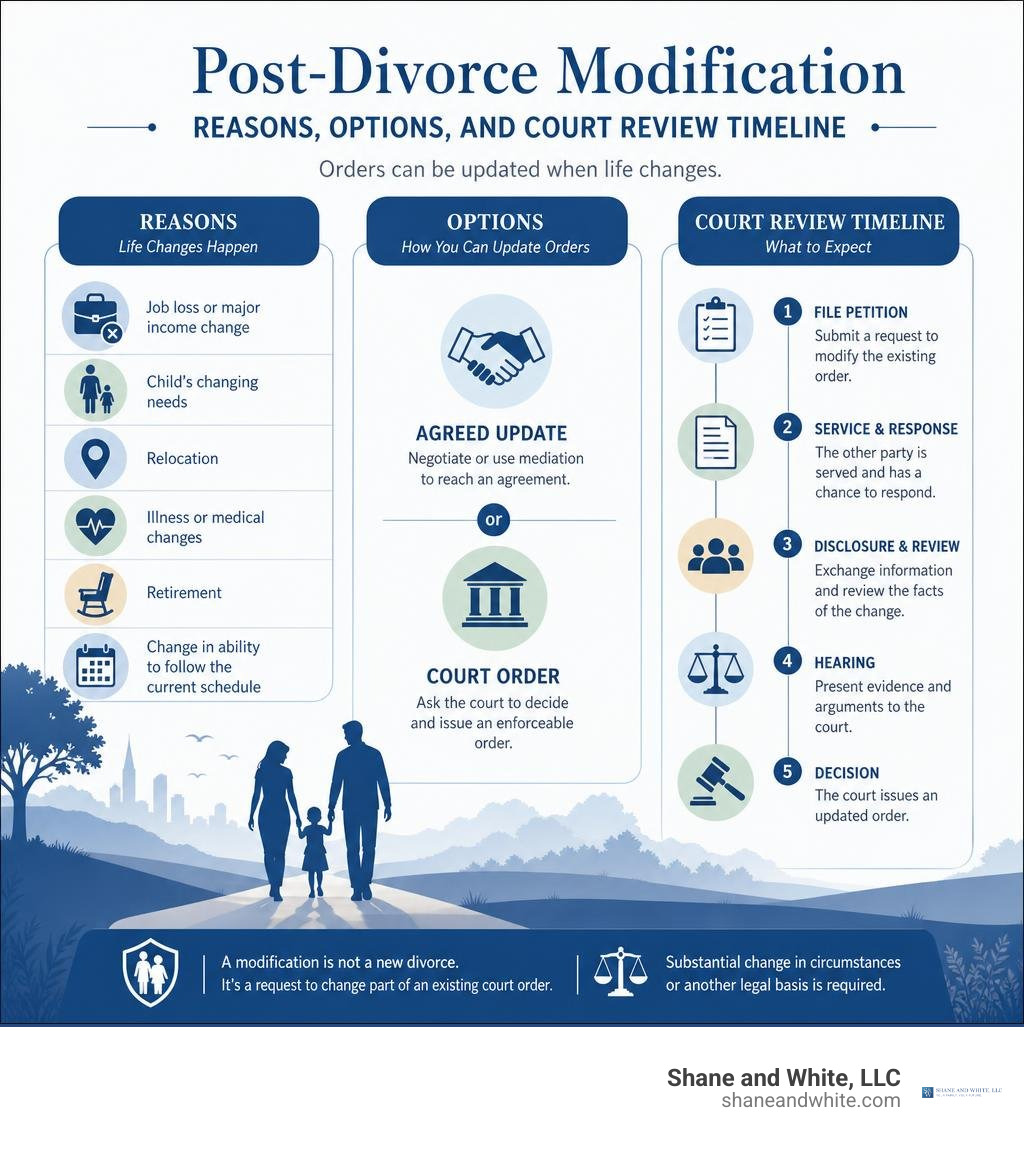
- A modification is not a new divorce. It is a request to change part of an existing court order.
- Connecticut courts generally require a substantial change in circumstances or another legal basis for revisiting the order.
- Common reasons include job loss, a major income change, a child’s changing needs, relocation, illness, retirement, or a change in a parent’s ability to follow the current schedule.
- You can pursue an agreed update through negotiation or mediation, but a court order may be needed to make the change enforceable.
A final judgment should reflect real life, but life after divorce rarely stays still. Before filing, it is important to understand what has changed, gather clear records, and consider how a proposed update affects your children, finances, and long-term stability.
I am Kenneth White, Esq., and my family-law background includes court-appointed mediation and guardian ad litem work, as well as years of work with post-judgment family disputes. As an east windsor post divorce modification attorney, I help clients assess changed circumstances and pursue practical, legally sound updates to support and parenting orders.
Easy east windsor post divorce modification attorney word list:
- child custody lawyer east windsor nj
- east windsor divorce housing rights lawyer
- family law attorney east windsor
Understanding Post-Divorce Modifications and Legal Grounds
When a court issues a Final Judgment of Divorce, it sets terms based on the financial and personal facts existing at that exact moment. However, as the months and years pass after August 2026, life evolves. Post-divorce modifications exist to ensure your legal obligations and rights evolve right along with it.
A modification is a formal court order that alters, updates, or terminates specific terms of your original divorce decree. The core requirement for almost any modification is showing a substantial change in circumstances. The court will not grant a request simply because one party is dissatisfied with the original terms. You must present concrete evidence that an unforeseen, major change has occurred making the original order unfair, unworkable, or contrary to the child’s best interests.
When to Consult an East Windsor Post Divorce Modification Attorney
Knowing when to take legal action can save you significant time, stress, and money. It is wise to reach out to an east windsor post divorce modification attorney as soon as a life change becomes permanent or long-term.
You should consider revisiting your custody arrangements when:
- A parent’s work schedule permanently changes (e.g., shifting to overnight or weekend shifts).
- One parent intends to relocate, which will impact the current parenting schedule.
- A child develops specialized educational, medical, or emotional needs that require a shift in physical custody or decision-making.
- The existing schedule is consistently ignored or violated by one party.
Legal Grounds for Modifying Financial Orders
Financial support obligations—both child support and spousal support (alimony)—are tied directly to economic realities. When those realities shift, the financial terms must often be recalibrated.
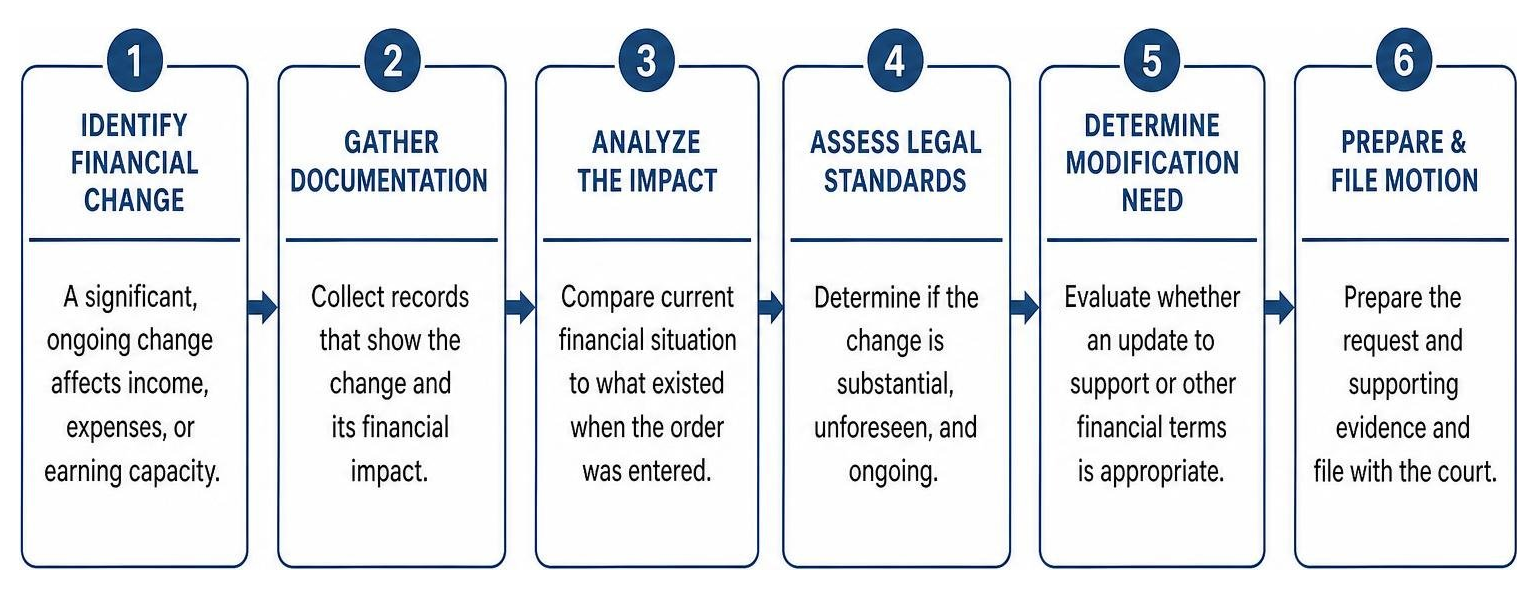
Common legal grounds for modifying financial orders include:
- Involuntary Income Loss: Being laid off, demoted, or experiencing a business downturn beyond your control.
- Career Shifts: Understanding how changing jobs affects your alimony or child support is vital when moving to a new role with higher or lower compensation.
- Medical Disability: Severe illness or injury that limits your earning capacity or increases living expenses.
- Retirement: Reaching good-faith, customary retirement age, which typically reduces overall income.
Modifiable Provisions in Your Final Judgment
Not every part of a divorce judgment can be changed. Property division (how assets and debts were split at the time of divorce) is almost always final and unchangeable. However, support and custody provisions remain subject to modification throughout the life of the order.
| Provision Type | Legal Standard for Modification | Key Factors Considered |
|---|---|---|
| Child Custody & Parenting Time | Best Interests of the Child & Material Change in Circumstances | Child’s safety, stability, school needs, parent availability, and parental cooperation. |
| Child Support | Substantial Change in Income or Financial Guidelines Shift | Income of both parents, healthcare costs, daycare expenses, and overnight custody split. |
| Alimony / Spousal Support | Substantial Change in Financial Circumstances or Cohabitation | Payor’s ability to pay, payee’s financial need, job status changes, and cohabitation. |
Modifying Parenting Time and Custody Arrangements

Custody arrangements are never set in stone because children grow up and their needs change. When adjusting schedules, courts focus entirely on a child-first approach.
By putting kids first with an east windsor child custody attorney, we can help structure modified custody proposals that reflect your child’s current school, extracurricular, and social realities. Whether you need a simple modification of weekend hours or a major shift in legal custody, demonstrating that the change directly benefits your child is essential.
Adjusting Child Support and Alimony Obligations
Financial modifications often arise when one party’s financial landscape experiences a seismic shift. If your ex-spouse experiences a dramatic increase in income, or if you face an involuntary pay cut, the court can adjust child support to reflect current earnings.
Similarly, spousal support can be modified or terminated under specific legal conditions. For instance, if you are wondering what to do if your ex stops paying child support, or if you are saying i want to terminate my alimony payments because my ex spouse has a significant other, legal remedies exist. In many jurisdictions, a former spouse cohabiting with a new partner in a relationship tantamount to marriage provides legal grounds to reduce or completely end alimony payments.
Why Hire an East Windsor Post Divorce Modification Attorney

Attempting to handle post-judgment litigation without professional assistance can lead to dismissed motions, missed deadlines, and lost financial recovery. Family law procedures require strict adherence to evidence rules, financial disclosures, and statutory standards.
At Shane and White, LLC, our firm brings over 40 years of experience to every post-divorce dispute. We provide personalized attention, carefully reviewing your original judgment and current documentation to build an unassailable case for court.
How an East Windsor Post Divorce Modification Attorney Handles Support Claims
When you seek to adjust support, vague statements like “I make less money now” are not enough. Judges require clear, verifiable documentation.
An east windsor post divorce modification attorney will analyze:
- Tax returns, W-2s, 1099s, and recent pay stubs.
- Detailed profit-and-loss statements if self-employed.
- Official documentation regarding job loss, severance, or medical disability.
- Understanding what your new job means for continued receipt of alimony edit to protect your income updates.
We handle the financial calculations and structure your evidence so the judge can quickly see why a modification is legally required.
Enforcing Orders and Resolving Post-Judgment Disputes
Sometimes, a modification request is paired with an enforcement action. If your ex-spouse is refusing to follow the existing court order, simple negotiation may no longer be an option.
Through post-judgment modification enforcement, we can ask the court to hold an uncooperative party in contempt, enforce payment of missed support, or address specialized obligations, such as when your ex wont pay college obligations.
The Court Process and Out-of-Court Alternatives in East Windsor
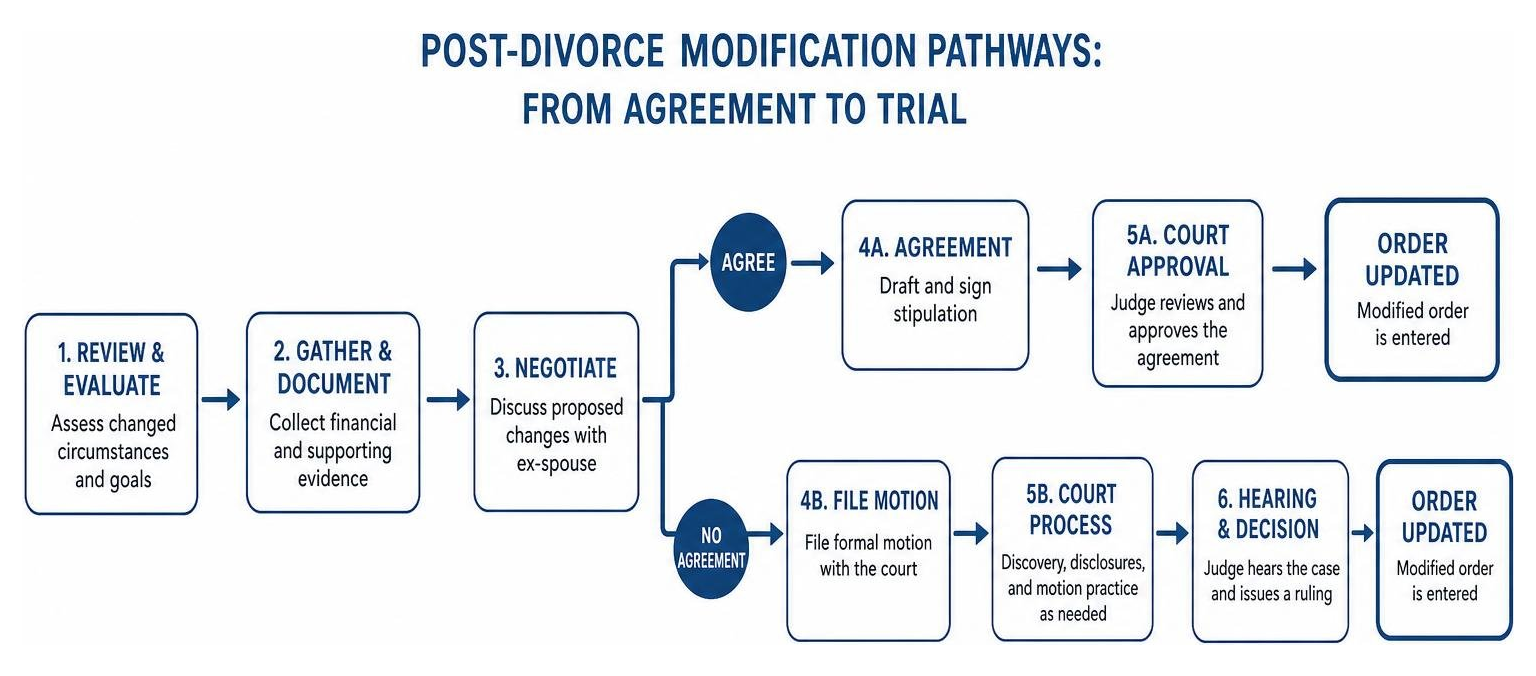
Modifying an order does not automatically mean heading into an intense courtroom fight. There are several pathways available to update your divorce decree, depending on the level of cooperation between you and your former spouse.
Filing Formal Motions with the Court
If you and your ex-spouse cannot agree on a proposed change, formal judicial intervention is required. This process begins by filing an official application with the family court.
When when you need the judge to decide an issue file a motion, our legal team prepares comprehensive certifications detailing your changed circumstances, submits supporting exhibits, and represents you at oral argument before the judge.
Alternative Dispute Resolution: Mediation and Collaboration
Court battles can be costly and emotionally exhausting. Fortunately, alternative dispute resolution (ADR) provides a streamlined, private, and cost-effective alternative.
- Mediation: A neutral mediator helps both parties talk through proposed changes to custody or support to reach an agreement.
- Collaborative Practice: Both parties work alongside trained lawyers to negotiate a fair update out of court.
Once an agreement is reached through mediation or negotiation, your east windsor post divorce modification attorney will draft a formal Consent Order. This document is submitted to the judge for approval, turning your voluntary agreement into an enforceable court order without requiring a trial.
Key Considerations Before Filing for Modification
Before launching a post-divorce application, take time to evaluate your position:
- Financial Cost vs. Benefit: Will the potential reduction in support outweigh the legal fees required to litigate the issue?
- Strength of Evidence: Do you have clear, written proof of the changed circumstances?
- Relationship Impact: How will filing a motion impact your co-parenting relationship?
Reflecting on what happens now tying up loose ends upon your divorce helps ensure that taking legal action is the smartest strategic move for your future.
Frequently Asked Questions About Post-Divorce Modifications
What qualifies as a substantial change in circumstances?
A substantial change is a permanent, material, and unexpected shift in your financial or personal situation. Examples include an involuntary job loss, a major medical diagnosis, a significant income increase for either party, a child moving in with the other parent full-time, or a cohabitation relationship that alters financial need.
How long does the post-divorce modification process take?
The timeline varies based on court dockets and whether the modification is contested. An agreed-upon Consent Order can often be processed by the court in a few weeks. However, a contested motion requiring discovery, financial evaluations, or evidentiary hearings can take several months to resolve.
Can child support or alimony be modified retroactively?
Generally, courts will only modify support retroactively to the date that the formal motion for modification was officially filed and served on the other party. Courts rarely grant retroactive relief for periods prior to the filing date. Therefore, if you experience a job loss or financial hardship, it is critical to file your application immediately rather than waiting.
Conclusion
Life changes continuously, and your legal agreements should keep pace with your current reality. Whether you need to adjust parenting schedules, reduce alimony obligations due to job changes, or enforce unpaid child support, taking early legal action protects your rights and financial wellbeing.
At Shane and White, LLC, we bring decades of dedicated legal experience to every family law matter. We are committed to offering clear communication, sensible strategies, and strong advocacy for every client.
If you need guidance updating your support or custody judgment, contact our office today to explore our full range of divorce legal services and schedule a consultation with a skilled legal team.


