


What an East Windsor Divorce Initial Consultation Attorney Can Do for You
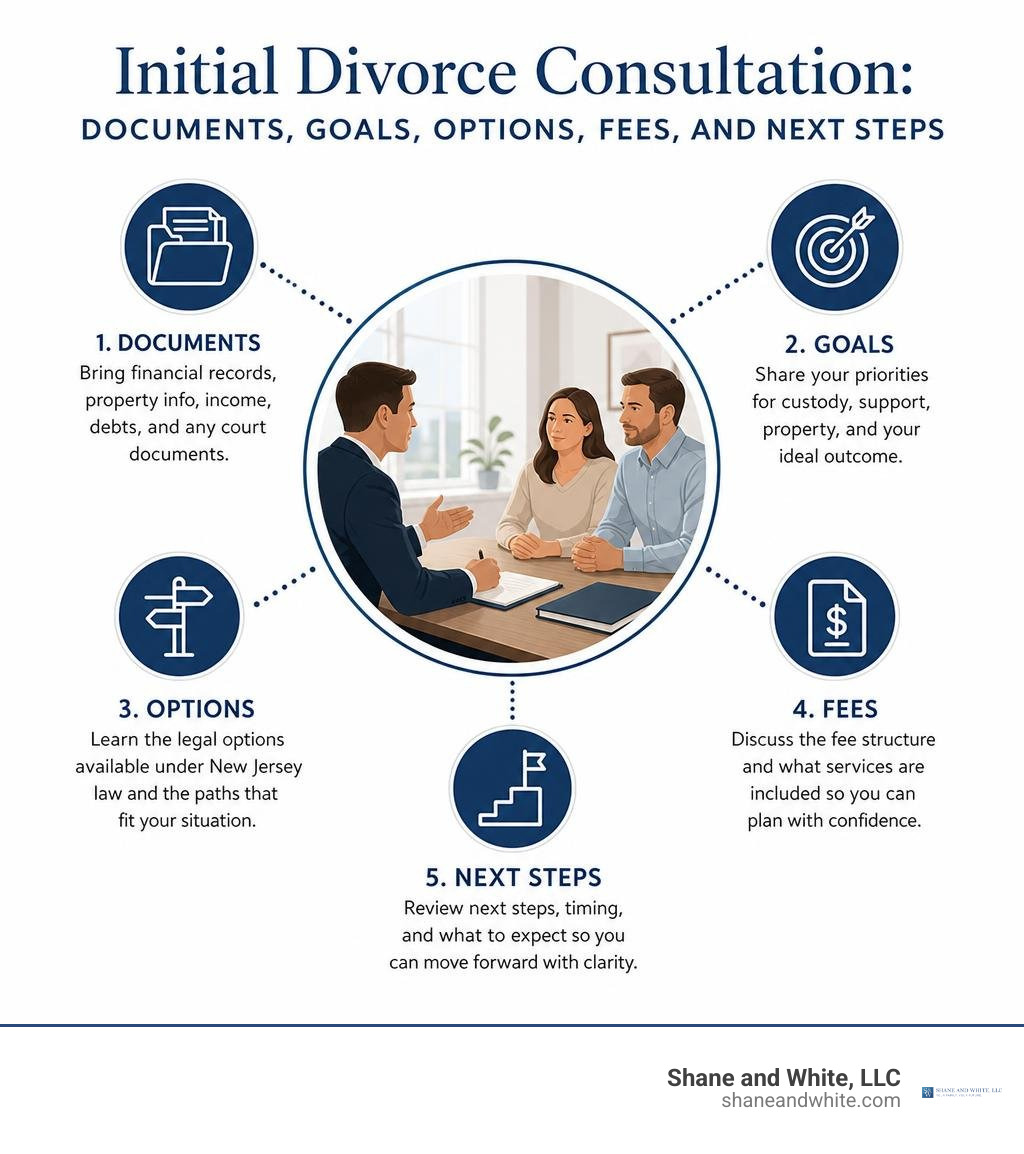
An east windsor divorce initial consultation attorney can review your situation, explain your options under New Jersey law, and help you plan the next practical step. Your first meeting is a chance to discuss custody, support, property, debt, timing, and legal fees before you decide whether to move forward.
Divorce can feel personal under the weight of emotional stress, but the consultation should be clear and focused. Bring the facts, ask direct questions, and use the meeting to see whether the lawyer’s approach fits your goals and budget.
I am Kenneth White, Esq., a New Jersey Supreme Court Certified Matrimonial Law Attorney with experience in family-law settlement work, mediation, and court-appointed roles. As an east windsor divorce initial consultation attorney, I help clients understand the issues that matter most before taking the next step.
Discover more about east windsor divorce initial consultation attorney:
How to Prepare for an East Windsor Divorce Initial Consultation Attorney
Preparing for your initial consultation transforms what could be an overwhelming experience into an efficient, highly productive session. When you walk into our office organized, you maximize every minute of legal advice. Preparation allows us to bypass basic gathering phases and dive straight into analyzing the unique aspects of your case.
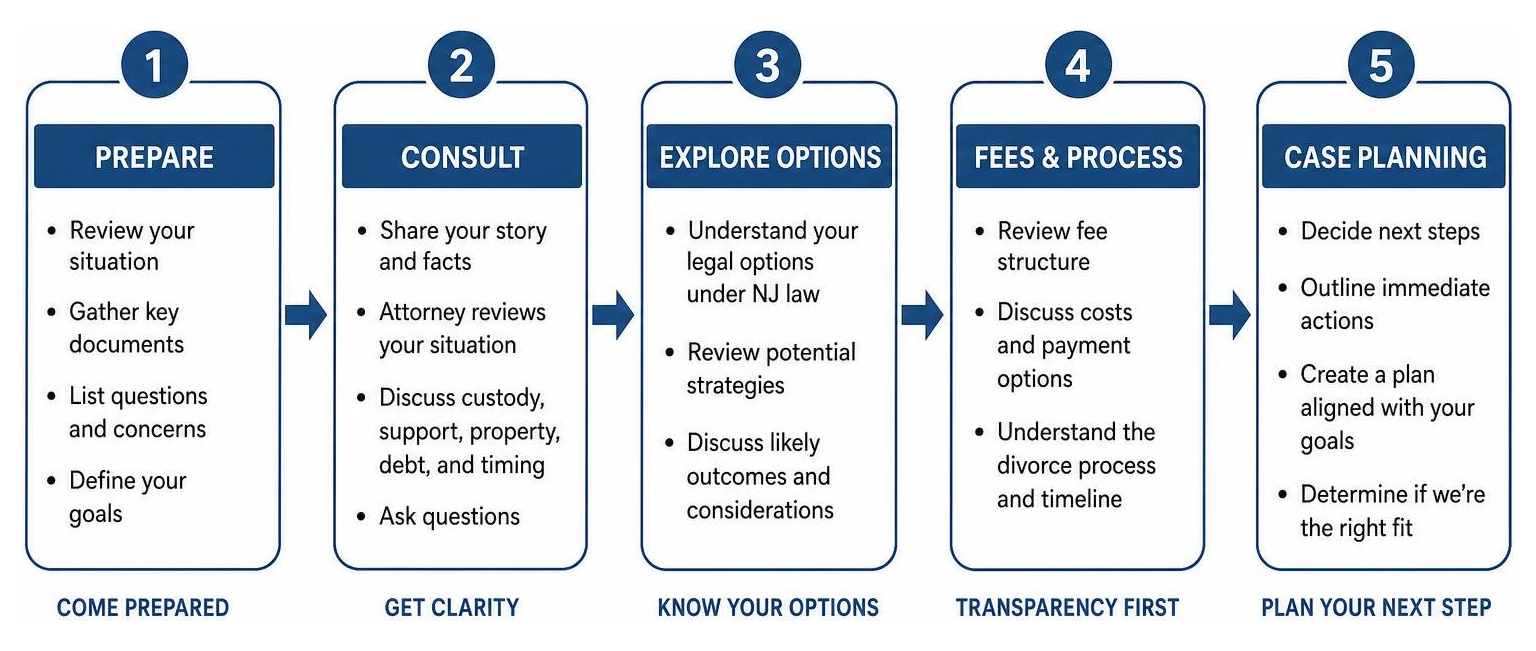
Taking time to review your background before meeting an east windsor divorce initial consultation attorney helps us quickly identify key risk areas, potential custody strategies, and financial exposures. You can learn more about selecting the right representative in our guide to Finding an East Windsor Divorce Lawyer. Working with a firm versed in New Jersey family law ensures your case benefits from established local court familiarity and prompt, practical guidance. Discover how localized representation keeps stress levels low in our article on Local Attorney Benefits.
Checklist: What to Bring to Your First Meeting
To give you the most accurate assessment of your legal position during your first meeting, having key documentation ready is vital. While you do not need every single financial piece on day one, bringing core records gives us a clear picture of your marital estate.

- Income Documentation: Your recent pay stubs, W-2 forms, 1099s, and tax returns for the past two to three years.
- Asset Records: Recent statements for bank accounts, investment portfolios, retirement funds (401k, IRA, pensions), and real estate deeds.
- Liability Records: Credit card balances, mortgage statements, vehicle loans, and personal debt agreements.
- Legal Agreements: Any existing premarital agreements (prenups), postmarital agreements, or prior court orders (such as temporary support orders).
- Personal Notes: A timeline of key marriage milestones, cause of separation, and a brief summary of primary custody or financial goals.
Key Questions to Ask Your East Windsor Divorce Initial Consultation Attorney
Your initial meeting is a mutual job interview. While we evaluate how to help you under New Jersey law, you should evaluate whether our team is the right partner for your journey.
- Fee Structure & Billing: How do retainer fees work, what are your hourly rates, and how often will I receive itemized billing statements?
- Communication Strategy: Who handles day-to-day questions about my case? Will I work directly with you or an associate attorney?
- Case Strategy & Timeline: What is a realistic timeline for resolving my divorce, given current court schedules in New Jersey?
- Dispute Resolution Options: Based on my spouse’s likely reaction, is our case suitable for mediation, collaborative negotiation, or courtroom trial?
Understanding the Divorce Process and Dispute Resolution Options
The journey through the New Jersey legal system follows structured stages, beginning with filing a Complaint for Divorce and concluding with a Final Judgment of Divorce. New Jersey offers both “no-fault” grounds (most commonly irreconcilable differences that have existed for at least six months) and traditional “fault” grounds (such as extreme cruelty, adultery, or desertion).
Navigating these choices requires careful strategic planning. For a deeper breakdown of each court stage, consult The Divorce Process Guide.
Mediation vs. Collaborative Divorce vs. Litigation
Selecting the right forum to resolve your dispute directly affects your stress levels, financial investment, and overall outcome.
| Dispute Resolution Method | Core Approach | Best Suited For | Primary Benefit |
|---|---|---|---|
| Mediation | Neutral third-party facilitator guides voluntary compromise | Couples willing to communicate transparently and seek out fair solutions | Cost-effective, confidential, and maintains decision-making control |
| Collaborative Divorce | Team-based negotiation where both parties commit to non-court solutions | Spouses who desire structured legal support without going to trial | Professional support (financial planners, mental health professionals) without court pressure |
| Litigation | Court-driven process where a Family Court Judge issues binding rulings | High-conflict cases, non-cooperative spouses, or complex asset disputes | Enforceable court orders, formal discovery processes, and judicial protection |
For a comprehensive look at how courts handle contested trials and motions, explore our insight on Family Court Guide.
Proceeding When a Spouse Refuses to Agree
A common anxiety among individuals seeking an initial meeting is whether a divorce can proceed if their spouse refuses to sign papers or negotiate. Under New Jersey law, your spouse cannot trap you in a marriage simply by withholding consent.
If a spouse refuses to participate after being formally served with legal process, the law provides a pathway called a Default Judgment. We serve formal notices, and if your spouse fails to respond within the statutory timeframe (typically 35 days), the court can enter a default judgment grant granting your requested terms regarding property, child custody, and support based on your submittals.
Key Issues: Custody, Asset Division, and Alimony
During an initial strategy session with an east windsor divorce initial consultation attorney, we evaluate three core areas that shape your future: your children, your accumulated wealth, and your income security. Read further about safeguarding your future in our article on Protecting Your Rights and Assets.
Child Custody and Support Determinations
New Jersey public policy strongly favors both parents maintaining an active, meaningful role in their children’s lives, provided it is safe to do so. Courts divide custody into legal custody (decision-making authority over health, education, and welfare) and physical custody (where the children reside day-to-day).

Child custody and parenting time schedules are created based on the best interest of the child standards. Factors include parent communication abilities, historical parenting roles, and the physical safety of the child. Child support is calculated using state statutory guidelines that factor in parental incomes, overnight parenting time, healthcare costs, and childcare expenses. Learn how to prioritize family stability with our guide on East Windsor Child Custody Attorney.
Property Division, Debt Allocation, and Alimony
New Jersey is an “equitable distribution” state, meaning marital assets and debts are divided fairly, though not necessarily on a 50/50 split basis. Marital assets generally include everything acquired by either party from the date of marriage up until the filing of the divorce complaint.
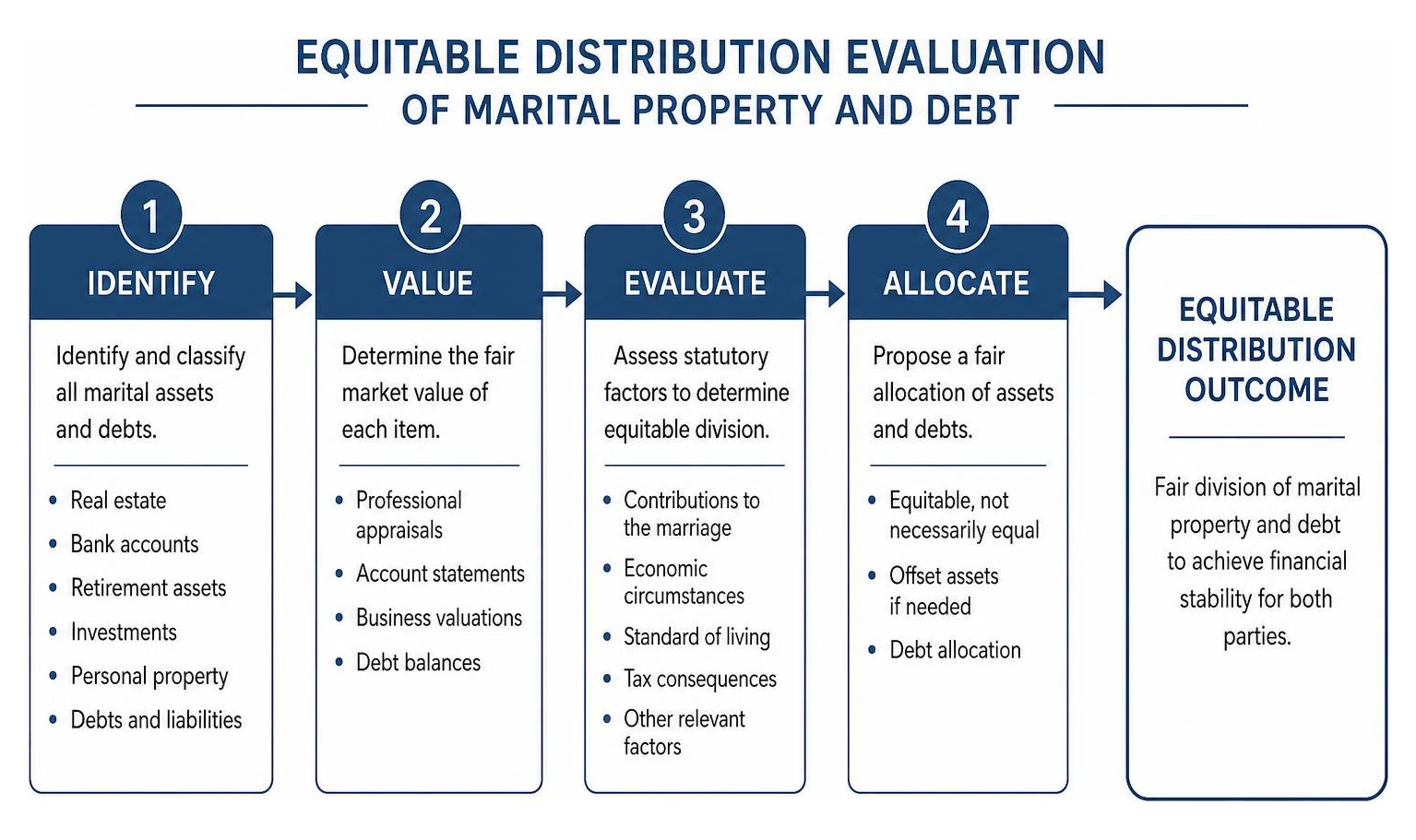
When dividing assets, courts weigh contributions to the marriage, economic circumstances, standard of living, and tax consequences. Special considerations apply when protecting the marital residence, which is addressed extensively in our overview for a Divorce Housing Rights Lawyer.
Alimony (spousal support) relies on statutory factors rather than rigid formulas. Courts assess:
- Actual economic need and the other spouse’s ability to pay.
- Duration of the marriage.
- Earning capacities, educational background, and employment history of each party.
- Parental responsibilities for shared children.
Costs, Payment Options, and Choosing Your Lawyer
Understanding legal fees right away helps prevent surprises down the road. During our initial meeting, we explain how retainers, hourly rates, and trust accounts function.
A retainer operates as a security deposit held in an attorney trust account. As work is completed on your file—drafting pleadings, legal research, court appearances, negotiations—fees are deducted based on hourly rates, and detailed billing updates are provided. Payment options and flexible planning are discussed upfront so you feel confident in your budget. Read more about selecting counsel in our reference guide on How to Choose Your Family Law Attorney.
Working with an Experienced East Windsor Divorce Initial Consultation Attorney
Selecting a law firm brings the reassurance of focused experience. With over 40 years of combined family law dedication, Shane and White, LLC offers personalized legal representation customized to your specific needs.
We avoid one-size-fits-all advice. Whether your case calls for aggressive courtroom representation or diplomatic settlement talks, our track record allows us to protect your rights cleanly and effectively. Learn more about choosing dedicated legal counsel in our resource on Finding the Right Family Law Attorney.
Frequently Asked Questions About Divorce Consultations
What are the grounds for filing a divorce in New Jersey?
New Jersey permits filing under no-fault grounds (irreconcilable differences for at least 6 months or living separate and apart for 18 consecutive months) or fault grounds (such as extreme cruelty, adultery, drug dependency, or desertion). Most litigants choose irreconcilable differences to reduce unnecessary conflict.
How long does a typical divorce take from consultation to decree?
An uncontested divorce where both parties agree on custody and asset division can be finalized within 2 to 4 months. Contested matters requiring formal discovery, economic appraisals, and court interventions typically range from 6 to 12 months or longer, depending on local court scheduling.
Can I receive spousal support if I was a stay-at-home parent?
Yes. Stay-at-home parents who set aside careers to raise children or support the household are eligible for alimony. Courts consider your financial contribution to the home, earning capacity, and the time needed to gain education or job training to become self-sufficient.
Conclusion
Taking the first step toward divorce requires a practical legal partner. Consultation with a knowledgeable attorney turns uncertainty into a manageable, step-by-step strategy for protecting your assets and family stability.
At Shane and White, LLC, our firm brings over 40 years of specialized family law experience across New Jersey. We provide personal attention and plain-English legal advice to guide you forward. Ready to discuss your rights? Schedule a Divorce Practice Consultation with our firm today.


