Find the Right Edison NJ Family Lawyer for Your Family Matter
An Edison NJ family lawyer can help you understand your options, protect your rights, and create a clear plan for issues such as divorce, custody, child support, alimony, property division, or post-divorce changes. Start by choosing a lawyer who is licensed in New Jersey, handles family law regularly, knows Middlesex County Family Part procedures, explains fees clearly, and communicates in a way that helps you make informed decisions.
Family cases are personal, but they also involve strict court rules, financial records, and deadlines. The right legal guidance can help you prepare for negotiation, mediation, or court while avoiding costly mistakes driven by stress or incomplete information.
I am Kenneth White, Esq., a New Jersey Supreme Court-certified matrimonial attorney with experience in Middlesex County family-law matters, including service on the Early Settlement Panel and Family Lawyers Committee. As an Edison NJ family lawyer, I focus on helping clients pursue practical, efficient resolutions while remaining ready for litigation when needed.
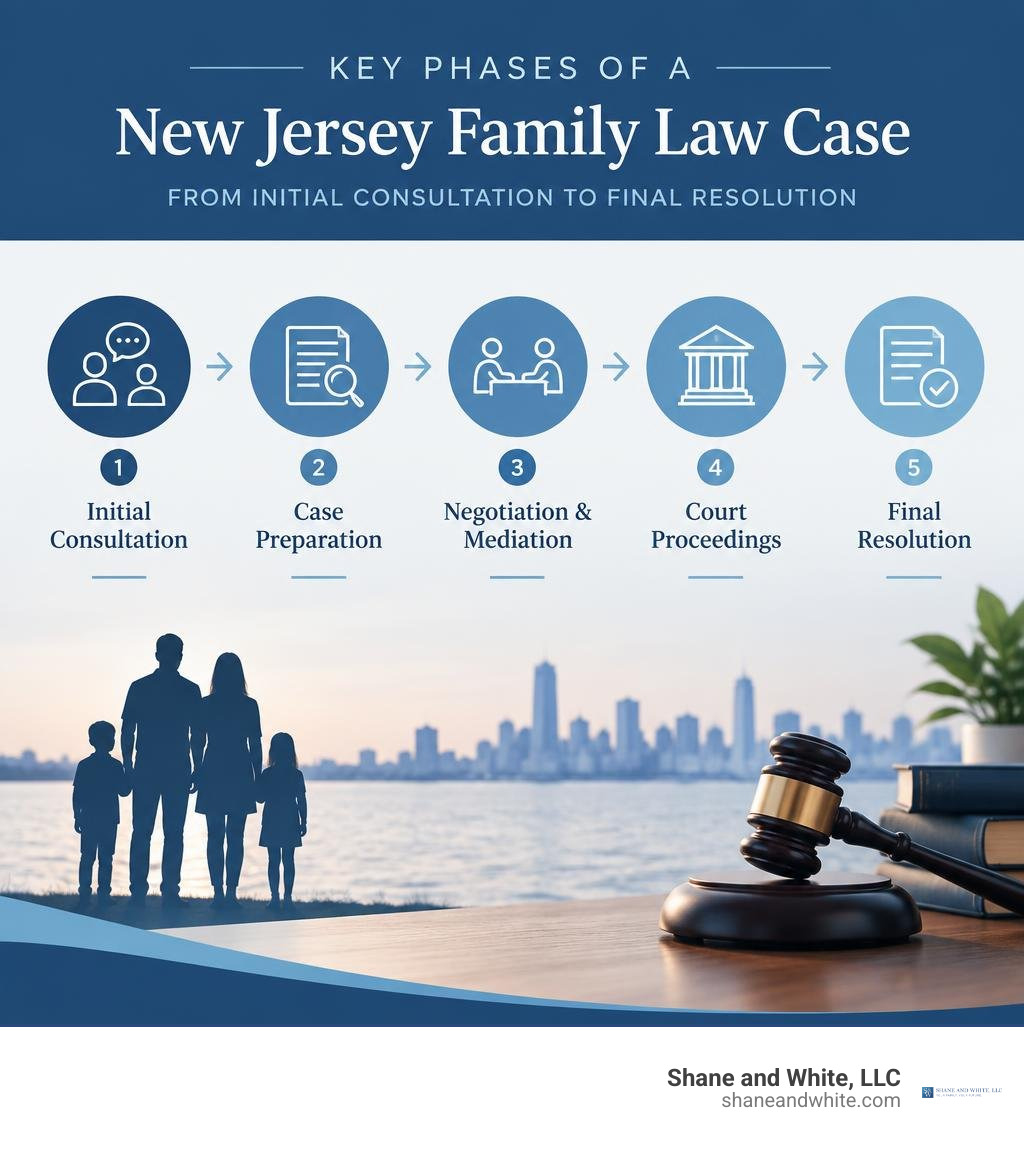
Core Services Provided by an Edison NJ Family Lawyer
Family law encompasses deeply personal matters that intersect directly with New Jersey statutory requirements and judicial procedures. When domestic issues require legal intervention, having an attorney who understands both the emotional weight and the local legal landscape makes all the difference. Our firm offers more than 40 years of focused legal experience, providing clear communication and tailored representation across every facet of family law.
Divorce and Dissolution of Civil Unions
Navigating the end of a marriage involves addressing property division, support obligations, and parenting rights. For a detailed breakdown of the legal grounds and procedural steps, explore The Ultimate Guide to New Jersey Divorce Laws and Process. Whether your case is uncontested or requires intensive courtroom advocacy, we ensure your long-term interests remain front and center.
Child Custody and Parenting Time
Custody determinations in New Jersey are governed strictly by the “best interests of the child” standard. We help parents establish legal custody (decision-making authority) and physical custody (residential arrangements). Our goal is always to design balanced parenting time schedules that foster stability for your children while protecting your parental rights.
Alimony and Spousal Support
New Jersey law recognizes open-durational, limited-duration, rehabilitative, and reimbursement alimony. Spousal support calculations depend on statutory factors such as the length of the marriage, each spouse’s earning capacity, standard of living established during the marriage, and physical health. We ensure that income evaluations are accurate so any support award is equitable.
Equitable Distribution of Assets and Debts
New Jersey is an equitable distribution state, meaning marital property is divided fairly, though not necessarily on a 50/50 basis. Marital assets can include family residences, retirement accounts, business interests, investments, and personal property, alongside shared liabilities.
Child Support Guidelines
Child support in New Jersey follows statutory mathematical guidelines based on the combined net weekly income of both parents, the number of overnights each parent spends with the child, and health insurance or child care expenses. We help clients accurately calculate base support while properly allocating extraordinary expenses like extracurricular activities and higher education costs.
Domestic Violence Protective Orders
When safety is threatened, immediate legal action is necessary. We guide clients through the process of securing temporary restraining orders (TROs) and representing them during final restraining order (FRO) hearings under the New Jersey Prevention of Domestic Violence Act. We also represent individuals facing unfounded domestic violence allegations.
Adoption and Kinship Legal Guardianship
Welcoming a child into your family requires careful adherence to New Jersey adoption laws, including background checks, home studies, and the termination of parental rights where appropriate. We also represent clients in related jurisdictions to handle complex interstate or local adoption proceedings.
When to Consult an Edison NJ Family Lawyer
Certain turning points demand prompt legal advice before irreversible mistakes occur. If you are experiencing any of the following scenarios, consulting an experienced attorney is essential:
- Contested Divorce Proceedings: When you and your spouse disagree on foundational matters such as asset valuation, custody, or spousal support, legal representation prevents you from compromising your statutory rights.
- Asset Protection and Complex Finances: If your marital estate includes closely held businesses, complex stock options, executive compensation packages, or separate premarital property, you need a lawyer who can analyze financial disclosures and engage forensic accountants if necessary.
- Parenting Time and Relocation Disputes: If one parent intends to relocate outside New Jersey with a child or attempts to restrict your scheduled access, immediate court intervention may be required to protect the parent-child relationship. Understanding What to Expect When You Are Getting a Divorce can provide critical clarity during these contentious transitions.
- Emergency Custody Relief: If a child faces imminent risk of harm, substance abuse exposure, or neglect, an attorney can file an emergent application (Order to Show Cause) for temporary custody modifications.
- Signs of Parental Alienation: When one parent systematically undermines the other parent’s relationship with the child, early legal intervention is necessary before parental bonds suffer long-term damage.
- Post-Judgment Modifications: Life changes after a final divorce decree. Substantial, permanent, and unanticipated changes in circumstances—such as involuntary job loss, severe disability, retirement, or a child’s emancipation—warrant a formal motion to modify existing support or custody orders.
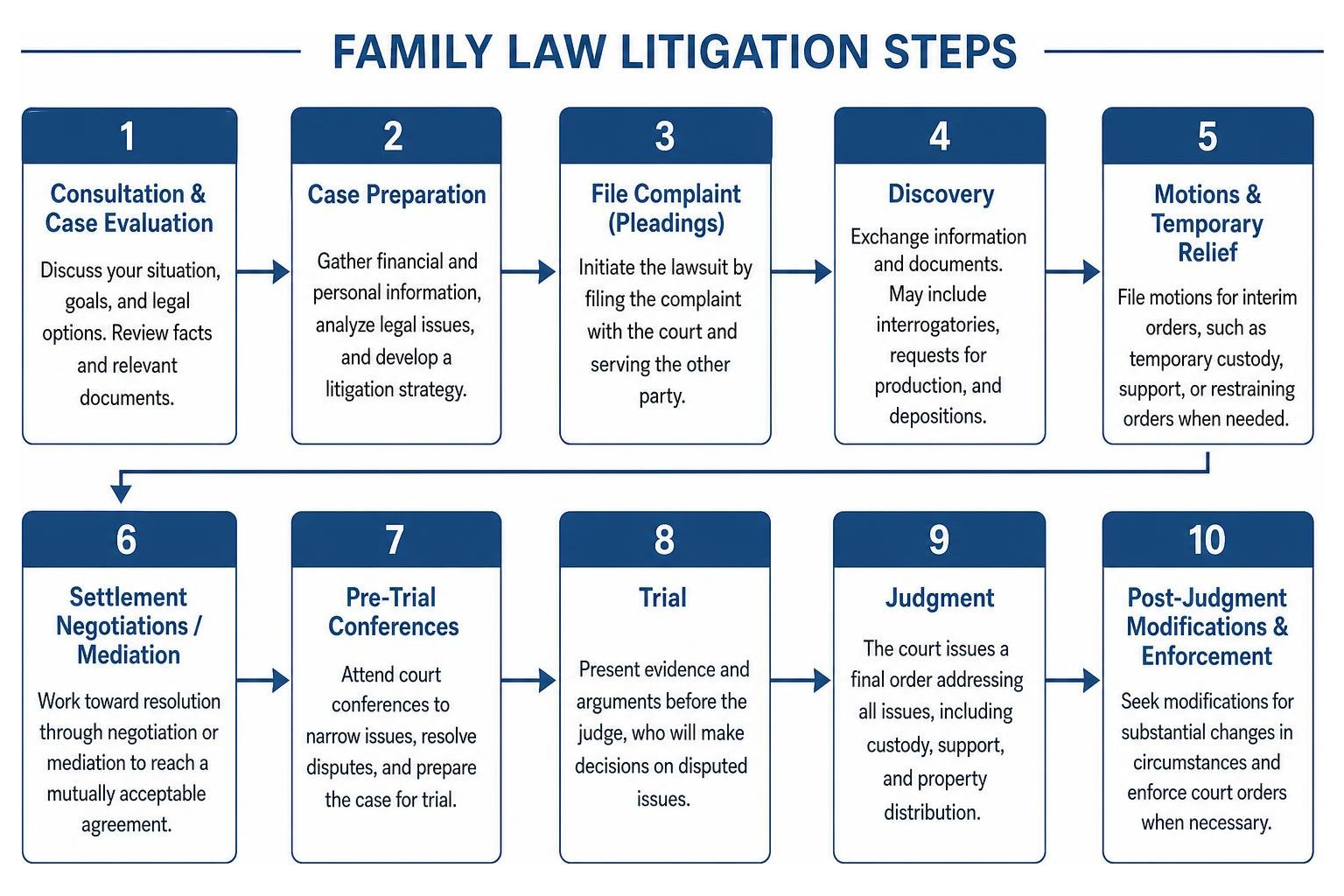
Alternative Dispute Resolution and Family Law Mediation
Litigation is not the only path to resolving family disputes, nor is it always the best one. Alternative Dispute Resolution (ADR) provides private, cost-effective, and less contentious methods for resolving marital and custody issues outside a traditional courtroom.

Mediation
In mediation, a neutral third-party mediator assists both parties in identifying common ground, evaluating realistic outcomes, and negotiating an agreement. The mediator does not issue rulings; instead, they facilitate direct communication so the spouses retain control over their settlement. Once an agreement is reached, it is memorialized into a formal Marital Settlement Agreement (MSA).
Arbitration
Arbitration serves as a private trial where the parties hire a qualified arbitrator (often a retired family court judge or experienced matrimonial attorney) to render a binding decision. This process offers significant privacy and streamlined scheduling compared to standard court calendars.
Collaborative Divorce
In a collaborative framework, both parties and their respective attorneys sign a participation agreement committing to resolve all matters without filing contested motions in court. Financial neutrals, family therapists, and child specialists often join the collaborative team to create comprehensive, enduring solutions.
ADR methods significantly reduce the financial and emotional costs associated with family court litigation while expediting final resolutions in the Middlesex County Family Part.
Navigating New Jersey Family Court Procedures and Local Rules
Family law matters originating in Edison, NJ, fall under the jurisdiction of the Middlesex County Superior Court, Chancery Division, Family Part, located in New Brunswick. Practicing successfully in this venue requires strict compliance with New Jersey Court Rules (Part V) and local case management directives.
The Case Information Statement (CIS)
The Case Information Statement is the central financial document in any New Jersey divorce or support proceeding. It requires an exhaustive disclosure of:
- Current gross and net monthly income.
- Monthly family budget across three categories (Housing, Utilities, and Personal Expenses) reflecting the marital standard of living.
- All assets owned individually or jointly (real estate, bank accounts, pensions, vehicles).
- All liabilities and debts (mortgages, personal loans, credit card balances).
- Recent tax returns, W-2 forms, and pay stubs.
Incomplete or inaccurate CIS disclosures can harm a party’s credibility with the judge and lead to court-ordered financial sanctions.
Staying Updated on New Jersey Family Law
New Jersey family jurisprudence evolves continuously through published Appellate Division and Supreme Court rulings, as well as statutory revisions enacted by the state legislature. Our legal team stays at the forefront of these developments through ongoing involvement in local and state bar associations, judicial committees, and continuing legal education.
How to Prepare Financially and Legally for Your Case
Preparation directly influences the efficiency and outcome of your family law matter. Before heading into an initial meeting or court conference, taking practical steps to organize your records simplifies the process.
- Compile Tax Returns and Income Records: Gather state and federal tax returns for the past three to five years, including all schedules, W-2s, 1099s, and recent pay stubs.
- Inventory Assets and Debts: Collect recent statements for checking, savings, investment, 401(k), IRA, and pension accounts. Document mortgage balances, auto loans, credit card statements, and student loans.
- Document Property Deeds and Titles: Locate real estate deeds, vehicle titles, prenuptial agreements, and estate planning documents.
- Create a Clear Case Timeline: Draft a factual, chronological summary of significant events, including dates of marriage, separation, major asset acquisitions, or incidents impacting child custody.
Learning how legal guidance assists at an initial consultation gives you a clear sense of what to expect when discussing your case for the first time.
Understanding Attorney Fee Structures
Family law attorneys generally charge for services through transparent billing structures based on case complexity and anticipated litigation hours:
| Fee Structure | How It Operates | Best Suited For | Key Financial Considerations |
|---|---|---|---|
| Initial Retainer & Hourly Rate | Client provides an upfront deposit held in a trust account. The attorney bills against this balance at set hourly rates for time spent on the case. | Contested divorces, complex asset division, active custody disputes. | Monthly itemized billing; retainer requires replenishment as work progresses. |
| Flat Fee Arrangements | A fixed, single price covering defined legal tasks from start to finish. | Uncontested divorces with signed settlement agreements, simple name changes. | Clear upfront cost; unexpected contested issues may require transitioning to an hourly agreement. |
| Limited Scope / Unbundled Services | Client hires an attorney for specific tasks, such as drafting a settlement agreement or representing them at a single hearing. | Self-represented litigants needing targeted procedural assistance. | Lower overall cost; client remains responsible for managing all other aspects of their case. |
How to Choose the Right Representation for Your Family Matter
Selecting the right legal advocate requires looking beyond marketing claims. You need an attorney whose qualifications, courtroom experience, and communication style align with your specific objectives.
Understanding how to evaluate credentials helps you find an attorney who fits your specific circumstances. For broader strategic insight, review our guide on finding the right New Jersey divorce attorney.
Key Criteria for Choosing the Best Edison NJ Family Lawyer

When interviewing prospective counsel, look for these key indicators of professional quality:
- Matrimonial Law Specialization: Family law is distinct from general civil litigation. Look for attorneys certified by the Supreme Court of New Jersey as Matrimonial Law Attorneys—a designation held by a small percentage of practitioners who demonstrate specialized expertise and pass rigorous peer evaluations.
- Familiarity with Local Courts: An attorney who regularly appears before the family court judges in Middlesex County understands local scheduling practices, individual judicial preferences, and local settlement panel expectations.
- Trial Experience vs. Settlement Acumen: The best family lawyers are skilled negotiators who work to resolve disputes amicably, but possess the courtroom litigation skills necessary to take your case to trial if the other party is unreasonable.
- Clear, Transparent Communication: Your lawyer should explain complex legal concepts simply, provide candid assessments of your position, return calls promptly, and keep you informed at every stage of your case.
Common Family Law Pitfalls and How Legal Counsel Protects You
Family law disputes carry significant emotional stress, which can lead to costly missteps if you act without sound advice.
1. Concealing Assets or Misstating Income
Attempting to hide bank accounts, transfer property to relatives, or depress business revenue during a divorce can destroy your credibility with the court. New Jersey judges can impose financial sanctions, award attorney’s fees to the other party, or grant a larger share of the marital estate to your spouse if deception is uncovered.
2. Making Decisions Based on Emotion Rather Than Strategy
Litigating out of anger or a desire for retribution leads to mounting legal fees with little practical benefit. Experienced counsel helps you separate emotional frustrations from strategic legal priorities, focusing your time and resources on protecting your financial future and parental rights.
3. Agreeing to Ambiguous Parenting Plans
Informal or vaguely worded parenting time schedules often lead to future conflict. A properly drafted agreement clearly defines holiday rotations, vacation allocations, pick-up and drop-off protocols, and dispute resolution mechanisms to prevent future disputes.
4. Missing Mandatory Court Deadlines
Failing to submit responsive pleadings, Case Information Statements, or discovery disclosures on time can result in court sanctions, including the striking of your pleadings or the entry of a default judgment against you.
Frequently Asked Questions About Family Law in Edison NJ
How much does it typically cost to hire a family attorney in Edison, NJ?
The overall cost varies depending on whether your case is uncontested or heavily contested. Uncontested matters resolved through direct negotiation or mediation generally cost significantly less. Contested cases involving business valuations, forensic accounting, or custody evaluations require more legal hours, which increases costs. Most attorneys charge an initial retainer fee that is placed in a trust account, with services billed against that retainer at standard hourly rates.
How does New Jersey determine property division during divorce?
New Jersey applies the principle of equitable distribution rather than equal division. The court identifies marital property (assets and debts acquired from the date of marriage through the date a divorce complaint is filed), assigns a fair market value to those assets, and divides them equitably based on statutory factors. These factors include the length of the marriage, economic circumstances of each spouse, contributions to marital property, and tax consequences.
What should I bring to my first family law consultation?
To make the most of your initial meeting, bring:
- Recent state and federal tax returns (last 2–3 years).
- Recent pay stubs or proof of all income sources.
- Statements for primary bank, investment, and retirement accounts.
- Current mortgage statements and real estate assessments.
- Any existing court orders, prenuptial agreements, or prior divorce decrees.
- A written summary of your case timeline and primary objectives.
Conclusion
Family law disputes can be challenging, but you do not have to navigate them alone. Whether you are facing a contested divorce, working through a custody disagreement, or negotiating a fair property division, having skilled legal counsel provides clarity and peace of mind.
At Shane and White, LLC, we combine more than 40 years of legal experience with personalized attention and clear communication. We are committed to protecting your parental rights, safeguarding your financial interests, and guiding you toward a stable, confident future.
If you need trusted legal representation in Edison or throughout Middlesex County, schedule a consultation with experienced legal counsel to discuss your case and understand your options.