


What to Expect from a Divorce Lawyer Free Consultation
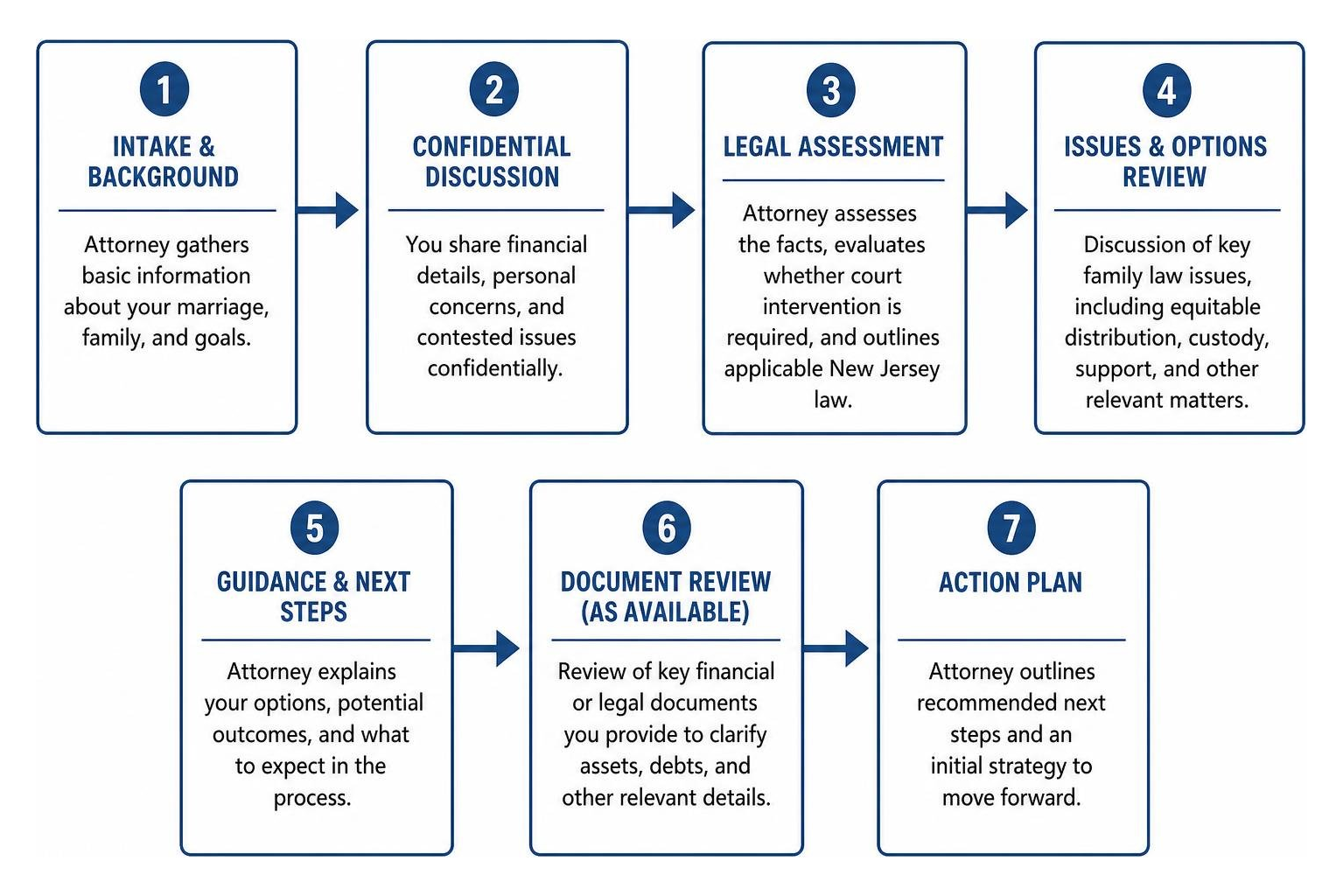
An initial consultation functions as a comprehensive triage session. When you sit down with an attorney, the primary objective is to assess the unique facts of your marital situation, establish whether court intervention is required, and outline the applicable statutory guidelines under New Jersey law. Rather than getting lost in the weeds of courtroom procedure on day one, this meeting helps you understand what to expect when you are getting a divorce so you can move forward with confidence.
During this session, conversations are shielded by ethical rules governing prospective clients. Even if you do not formally retain the attorney afterward, the discussions remain confidential. This protection enables you to disclose sensitive financial arrangements, personal concerns, and contested family issues freely without fear that the information will be shared with your spouse or opposing counsel.
Scope of Discussion and Family Law Issues Covered
A standard initial case evaluation covers the critical pillars of New Jersey family law:
- Equitable Distribution: New Jersey is an equitable distribution state, meaning marital assets and liabilities are divided fairly, though not automatically 50/50. During the consultation, we discuss real estate equity, retirement portfolios, pensions, closely held business valuations, and outstanding debts. Learning how a divorce attorney helps protect your rights and assets early prevents inadvertent dissipation or concealment of marital funds.
- Child Custody and Parenting Plans: We review legal custody (decision-making authority regarding health, education, and welfare) and physical custody (parenting time schedules). The baseline standard applied by New Jersey family courts is always the best interests of the child.
- Child Support and Alimony: We review child support obligations under the New Jersey Child Support Guidelines alongside statutory alimony factors, including the duration of the marriage, standard of living, and disparate earning capacities.
- Domestic Violence and Protective Orders: If your situation involves safety risks, emergency protection under the Prevention of Domestic Violence Act takes immediate precedence to secure temporary restraining orders (TROs) and preserve the household status quo.
Meeting Structure, Timeframes, and No-Obligation Policies
Most free initial case evaluations run between 30 and 45 minutes. Because time is focused, the meeting follows a structured rhythm:
- Conflict Verification: Confirming neither the firm nor its attorneys have represented or consulted with the opposing spouse.
- Fact-Finding and Issue Identification: Gathering the background timeline, date of marriage, separation dates, children’s ages, and high-level asset balances.
- Strategic Legal Analysis: Applying relevant New Jersey statutory factors to identify potential strengths, liabilities, and process avenues (such as direct negotiation, mediation, or formal litigation).
- Roadmap and Next Steps: Discussing realistic timelines, retainer expectations, and immediate protective actions.
Reputable law firms offer these initial evaluations with a genuine zero-obligation policy. The session is intended to provide actionable legal clarity, leaving you in full control of deciding whether and when to move forward.
Comprehensive Preparation Checklist: Documents and Information to Bring
Arriving at your initial meeting organized ensures that your consultation is spent discussing strategy rather than searching for basic facts. Working through the divorce process guide before your appointment gives you a clear sense of what records matter most.
Essential Financial and Court Records Checklist
Gather as many of the following records as you can reasonably access:
- Court and Legal Pleadings: Any Complaint for Divorce, Summons, or motion paperwork already served, alongside any existing temporary agreements, child support orders, or domestic violence filings.
- Marital Agreements: Prenuptial, postnuptial, or prior separation agreements.
- Income Verification: Your two most recent federal and state tax returns (with W-2s/1099s) and your last three pay stubs.
- Bank and Brokerage Accounts: Recent statements for checking, savings, investment, and cryptocurrency holdings.
- Retirement Assets: Recent statements for 401(k) plans, 403(b) accounts, IRAs, and defined-benefit pension plans.
- Real Estate Records: Recent mortgage statements, property tax assessments, and appraisals for the primary marital residence or secondary properties.
- Liabilities and Debts: Statements for credit cards, auto loans, personal loans, student debt, or lines of credit.
Defining Priorities and Organizing Key Facts
In addition to collecting financial statements, take time to write down your goals. Preparing ahead helps you avoid common mistakes to avoid during a divorce, such as making hasty verbal commitments or misjudging monthly living expenses.
- Construct a Marital Timeline: Note the date of marriage, dates of any separations, dates of major real estate purchases, and any periods of career interruption to care for children.
- Detail Parenting Routines: Document current morning routines, school drop-offs, extracurricular transport, and medical care responsibilities.
- Draft an Expense Overview: Outline current household carrying costs (mortgage/rent, utilities, insurance, childcare) to establish a realistic picture of your post-divorce budget.
Essential Inquiries to Evaluate Your Legal Representation

Your consultation is as much an interview of the attorney as it is a case assessment. Understanding how to choose your family law attorney comes down to asking direct, substantive questions about case philosophy, courtroom experience, and daily communication.
Critical Questions for a Divorce Lawyer Free Consultation
Spotting the signs you need a divorce attorney for your case is the first step; vetting the right advocate is the next. Use these questions to assess the attorney’s approach:
- “What immediate risks or vulnerabilities do you see in my case based on the facts I have shared?”
- “What proactive steps should I take right now—and what actions should I avoid—to protect my position?”
- “How frequently do your cases resolve through alternative dispute resolution (like mediation) versus full court trials?”
- “Who in your firm will manage my day-to-day communications, court appearances, and document drafting?”
- “How will we communicate about critical deadlines, settlement offers, and unexpected developments?”
Understanding Retainers, Hourly Rates, and Ongoing Costs
Transparent legal billing is essential for long-term financial stability. During the meeting, request a thorough breakdown of understanding how attorney fees are paid in divorce. Key fee elements include:
- Retainer Deposits: The initial advance payment deposited into a dedicated attorney trust account, against which billable time is drawn.
- Hourly Rates: The billing rates for partners, associate attorneys, and paralegals.
- Ancillary Costs: Third-party expenses such as county court filing fees, process server costs, forensic accountant fees, and custody evaluation costs.
- Cost Management: Clear strategies on how to reach a fair divorce settlement without going broke by reducing unnecessary motion practice and focusing on productive negotiations.
Navigating Complex Scenarios and Locating Legal Assistance
Every family’s circumstances are distinct. Securing the proper counsel requires careful attention when selecting representation in local venues across Edison NJ, New Brunswick NJ, and throughout Middlesex County NJ. Learning the nuances of finding the right New Jersey family law and divorce attorney ensures your lawyer understands the specific practices of local family part judges.
Preparing for a Divorce Lawyer Free Consultation When Your Spouse Has Counsel
If your spouse has already retained an attorney or served formal divorce papers, acting quickly is critical. New Jersey court rules impose strict deadlines—such as 35 days to file an Answer or Counterclaim after being served with a Summons and Complaint. Following proven tips for working with a family law attorney during divorce will help keep your case moving smoothly:
- Preserve the Status Quo: Do not cancel health, auto, or life insurance policies, drain joint bank accounts, or alter standard parenting schedules without a court order or formal written agreement.
- Perform Conflict-of-Interest Screening: Before sharing sensitive information, confirm the firm has not consulted with your spouse.
- Gather Communications: Preserve text messages, emails, and financial records that support your position on contested parenting or financial issues.
In-Person vs. Virtual Consultation Options
Consultations can typically be conducted in person or via secure video conference. Choosing the right format depends on the complexity of your documentation and your personal schedule.
| Feature / Consideration | In-Person Consultation | Virtual (Video/Phone) Consultation |
|---|---|---|
| Best Suited For | High-conflict disputes, extensive physical document reviews, complex multi-asset cases | Tight work schedules, initial exploratory overviews, emergency scheduling |
| Document Handling | Physical binders, paper tax records, court pleadings reviewed directly | Digital PDF uploads, screen-sharing financial spreadsheets and statements |
| Atmosphere & Dynamic | Face-to-face interaction, personal connection, direct office environment assessment | High convenience, zero travel time, private setting from your home or office |
| Scheduling Flexibility | Requires dedicated travel and calendar coordination | Easily scheduled around work hours, parenting duties, and lunch breaks |
Frequently Asked Questions About Initial Divorce Consultations
Is a free divorce consultation completely confidential?
Yes. Under the New Jersey Rules of Professional Conduct, prospective client communications receive attorney-client privilege protections. The information you share regarding your marital history, finances, and personal matters cannot be disclosed to third parties or used against you.
How long does a free divorce consultation usually last?
Initial consultations generally run between 30 and 45 minutes. Focusing on a concise summary of your assets, income, and parenting objectives ensures sufficient time to discuss strategy and answer your questions.
What happens immediately after the consultation concludes?
Following the meeting, the attorney provides a clear roadmap. If you choose to retain the firm, you will review and sign a retainer agreement detailing the scope of representation and deposit the agreed-upon retainer fee to initiate work on your case.
Conclusion
Entering the divorce process without legal direction can lead to costly mistakes in property division, parenting plans, and support arrangements. Taking the step to schedule an initial case evaluation gives you a clear understanding of your rights under New Jersey law and a concrete plan for what lies ahead.
At Shane and White, LLC, our legal team brings more than 40 years of combined family law experience to clients across Edison, Metuchen, Woodbridge, East Brunswick, and all of Middlesex County. We focus on personalized attention, straightforward communication, and strategic advocacy to protect your assets and family.
To review your situation and discuss your legal options with an attorney, schedule an initial consultation with our experienced New Jersey divorce team today.


