
Understanding the Core Process: How Long Can an Uncontested Divorce Take?
An uncontested divorce typically takes anywhere from 3 weeks to 6 months to finalize, depending on your state’s mandatory statutory waiting period and local court processing schedules. When you and your spouse decide to end your marriage cooperatively, an uncontested no-fault divorce offers the most direct path forward. Rather than spending months or years arguing in front of a judge, both parties work together to reach a mutual consent agreement outside the courtroom. This fundamental cooperation is why uncontested divorces cost a fraction of traditional litigation and resolve significantly faster.
Understanding what to expect when you are getting a divorce helps remove the mystery from the process. In an uncontested action, you bypass prolonged dispute resolution mechanisms because you have already resolved every substantive issue: the division of marital property, responsibility for debts, child custody, parenting schedules, child support, and spousal maintenance (alimony).
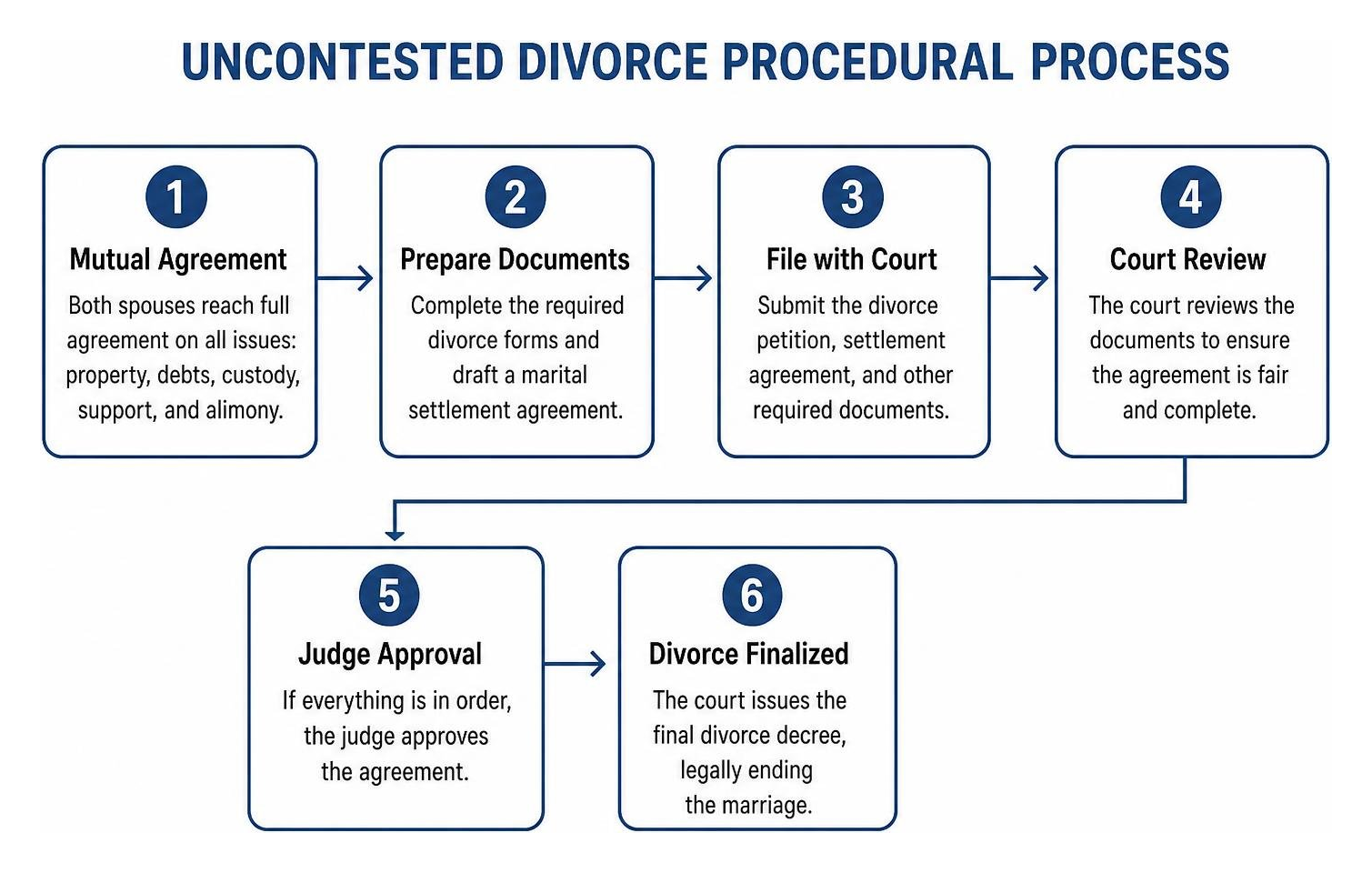
According to procedural frameworks established for contested and uncontested divorces, removing courtroom friction allows the court system to treat your case as an administrative review rather than an active dispute.
Contested vs. Uncontested Divorce Procedures
The procedural divide between contested and uncontested divorces comes down to where the negotiations happen and who holds the decision-making power:
- Contested Divorce: The parties cannot agree on one or more key terms. This triggers formal discovery windows, depositions, interrogatories, independent asset appraisals, motion hearings, and judicial case management conferences. These steps clog the court docket and routinely extend the timeline to anywhere from 9 to 18 months—or even several years if the case proceeds to a full trial.
- Uncontested Divorce: Spouses negotiate terms privately or with the guidance of their legal counsel or a neutral mediator. Once you sign a comprehensive marital settlement agreement (MSA), the litigation calendar disappears. You do not need formal discovery periods or combative court hearings, which dramatically reduces the overall duration.
Summary Dissolution vs. Standard Uncontested Filings
Depending on your jurisdiction, you may have access to an expedited procedure known as a “summary dissolution” or simplified divorce.
A summary dissolution is a streamlined track designed for couples who meet narrow statutory criteria:
- Short marriage duration (frequently under five years).
- No minor children born of or adopted during the marriage (and neither spouse is currently pregnant).
- Minimal shared marital assets and total debt below a strict statutory threshold.
- Mutual waiver of spousal support/alimony.
Couples eligible for summary dissolution skip several administrative steps. Standard uncontested filings, by comparison, accommodate couples with minor children, real estate, complex investments, and alimony agreements. While standard filings require more extensive documentation (such as formal child support worksheets and financial affidavits), they still proceed much faster than contested litigation as long as full agreement is maintained.
Statutory Waiting Periods and State-Specific Timelines
One of the most common misconceptions about cooperative divorce is that reaching an immediate agreement means the court will finalize the decree tomorrow. In reality, state laws establish mandatory waiting periods—often referred to as “cooling-off periods”—that create a statutory floor below which a divorce cannot legally finalize, regardless of how cooperative both spouses are.
| State | Statutory Waiting Period | Typical Uncontested Timeline |
|---|---|---|
| New Jersey | No statutory cooling-off period (grounds-based residency rules apply) | 2 to 4 months |
| Florida | 20 days post-filing | 4 to 6 weeks |
| Georgia | 31 days post-service | 45 to 60 days |
| Arizona | 60 days post-service | 90 to 120 days |
| Pennsylvania | 90 days post-service (mutual consent) | 3.5 to 5 months |
| Oregon | No mandatory waiting period | 3 to 8 weeks |
| California | 6 months post-service | 6 to 7 months |
| Texas | 60 days post-filing | 60 to 90 days |
State-by-State Breakdown: How Long Can an Uncontested Divorce Take Across the US?
Because family law is governed at the state level, the calendar varies widely depending on where you file:
- Pennsylvania: Under the Pennsylvania mutual-consent rules, there is a strict 90-day waiting period. This statutory clock starts on the date the non-filing spouse is officially served with the complaint. In a best-case scenario, accounting for final document review and decree entry, an uncontested matter takes about 3.5 to 5 months.
- Florida: Florida law establishes a short statutory minimum waiting period of 20 days from the filing date. For couples pursuing a simplified dissolution with no children or complex assets, the matter can wrap up in as few as 4 to 6 weeks.
- Arizona: Arizona Revised Statute § 25-329 requires a 60-day cooling-off period starting the day after service is completed. Most couples finalize their matters within 90 to 120 days once local court calendars and administrative reviews are factored in.
- Georgia: According to procedural rules, an uncontested divorce in Georgia can conclude in as few as 31 days after the respondent is served or signs an acknowledgment of service. In practice, most Georgia cases take between 45 and 60 days, as outlined in guides like How Long Does an Uncontested Divorce Take in Georgia? – LegalClarity.
- Oregon: Oregon is among the states with no statutory cooling-off period. If spouses submit a complete settlement agreement and joint petition, a judge can sign the judgment in just a few weeks.
- New York: While New York does not impose a traditional cooling-off period for no-fault actions, it establishes distinct procedural windows—such as giving the plaintiff 120 days to complete service and requiring a 40-day waiting period following a default before calendaring the Note of Issue.
Mandatory Cooling-Off Periods vs. Court Processing Time
It is essential to separate statutory waiting clocks from administrative court processing times. A 30-day or 60-day waiting period represents the earliest day a judge has the legal authority to sign your decree.
However, judicial caseloads, staffing shortages at county clerk offices, and local administrative rules dictate when a file is actually pulled for review. In heavily populated counties, backlogs can add 30 to 60 days on top of statutory minimums, whereas smaller suburban venues may review submitted packets within days of the waiting period expiring.
Key Phases in the Uncontested Divorce Process That Dictate Timing
Every uncontested divorce moves through defined procedural stages. Understanding these phases allows you to anticipate potential delays and keep your case on schedule. Reviewing The Ultimate Guide to New Jersey Divorce Laws and Process provides deeper insight into how these procedural benchmarks function in practice.
Filing, Service, and the Response Window
- Drafting and Filing the Initial Complaint/Petition: The process begins when one spouse (the plaintiff/petitioner) files the divorce complaint with the court clerk and pays the required filing fee.
- Service of Process: The filed documents must be delivered to the other spouse (the defendant/respondent). In a truly uncontested action, the non-filing spouse can sign an Acknowledgment or Waiver of Service. This avoids paying a process server or sheriff and starts any statutory waiting clocks immediately.
- The Response Window: Depending on the state, a respondent typically has 20 to 35 days to file an Answer or responsive pleading. In an uncontested case, the respondent either files an appearance acknowledging the agreement or allows the response window to lapse so the matter can proceed uncontested or by default.
Court Review, Waivers, and Final Decree Entry
Once the response window closes and all statutory waiting periods expire, the final packet is submitted to the assigned family court judge. This packet contains:
- The executed Marital Settlement Agreement.
- Sworn certifications and financial affidavits.
- Proposed Final Judgment of Divorce.
- Any applicable child support guidelines and parenting plans.
The court clerk and judge’s law clerk review the documents to ensure compliance with statutory standards, verify equitable distribution terms, and check child support calculations. Once the judge signs the Final Judgment of Divorce (or Divorce Decree), the marriage is officially dissolved.
Key Variables That Extend or Accelerate the Divorce Duration
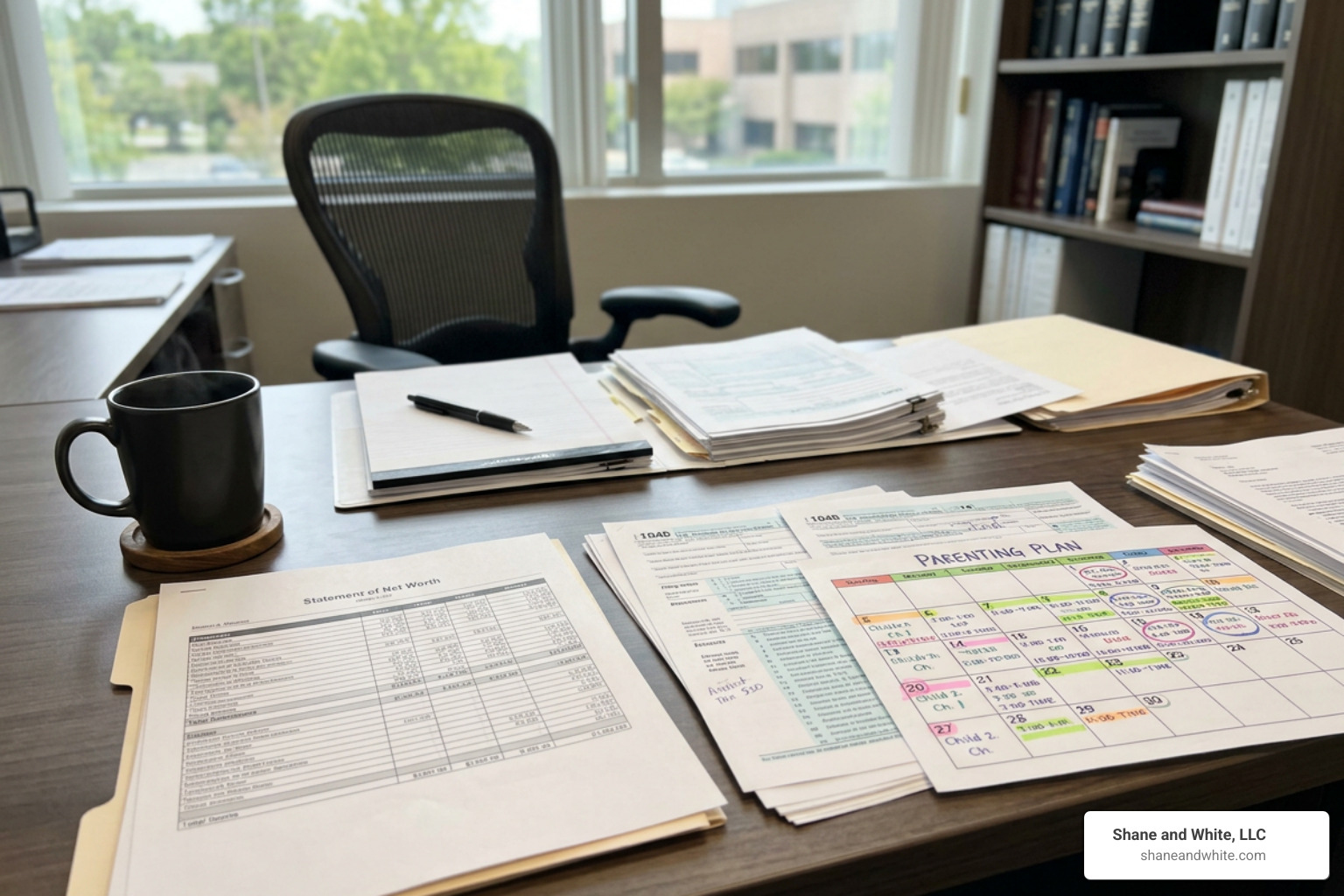
While the legal steps are standard, individual circumstances dictate whether your divorce takes six weeks or six months. Implementing smart strategies to dissolve your NJ marriage without massive debt often goes hand-in-hand with accelerating your timeline: clear communication and full transparency eliminate the issues that slow cases down.
How Long Can an Uncontested Divorce Take with Children and Complex Assets?
Adding children or substantial financial holdings to a divorce does not prevent you from proceeding uncontested, but it does require more documentation:
- Parenting Plans and Custody: Courts have a legal duty to protect the best interests of minor children. Judges will scrutinize parenting time schedules, legal custody terms, and holiday rotations to ensure stability.
- Child Support Worksheets: Child support must comply with state statutory formulas. Deviations from statutory guidelines require detailed written justifications, which judges review closely.
- Mandatory Parenting Seminars: Some jurisdictions require parents of minor children to attend court-approved parenting education seminars before a final decree can be entered. Failing to submit your certificate of completion will pause your case.
- Complex Asset Division: Dividing real estate, business interests, stock portfolios, and multiple properties requires clear valuation terms. Knowing how to reach a fair divorce settlement without going broke helps ensure your property terms are clearly drafted and pass judicial review on the first submission.
Critical Paperwork Errors and QDRO Delays
Administrative oversights are the single most common cause of unnecessary delays in uncontested divorces. If a court clerk identifies an error, the entire packet is rejected and returned, resetting your place in the review queue.
Common paperwork mistakes include:
- Incomplete financial disclosures or missing state-mandated asset statements.
- Missing notary acknowledgments or omitted signatures on exhibits.
- Inaccurate legal descriptions of real property or missing vehicle identification numbers.
- Failure to redact sensitive personal data (e.g., Social Security numbers, bank account numbers, minor children’s full birthdates) in public filings.
Another frequent delay involves retirement accounts. Splitting a 401(k), traditional pension, or 403(b) requires a separate court order known as a Qualified Domestic Relations Order (QDRO).
Because QDROs must be approved by both the court and the third-party retirement plan administrator, drafting and pre-approving these orders can take several weeks or months. Addressing your QDRO terms early in your settlement negotiations prevents post-decree complications.
Frequently Asked Questions About Uncontested Divorce Timelines
Can you finalize an uncontested divorce without appearing in court?
Yes, in many jurisdictions, an uncontested divorce can be finalized entirely on the papers without either party setting foot in a courtroom. When both spouses submit a complete, signed settlement agreement alongside sworn written affidavits testifying to jurisdiction, grounds, and the voluntary nature of the agreement, judges can enter a “desk divorce” or non-appearance judgment.
If a hearing is required by local court rules, it is often a brief, 10-minute uncontested proceeding conducted virtually via video conference.
Do you need an attorney for an uncontested divorce?
While you are legally permitted to file pro se (representing yourself), having experienced counsel review your paperwork offers distinct timeline advantages. Self-represented litigants often face repeated document rejections over minor formatting errors, statutory omissions, or unclear parenting provisions.
Working with legal counsel—such as consulting a comprehensive guide to finding an East Windsor divorce lawyer—ensures your Marital Settlement Agreement is enforceable, fully protects your legal rights, and moves through the clerk’s office without administrative rejection.
What steps must be taken immediately after receiving the final divorce decree?
Once the judge signs and stamps your final divorce decree, several important post-judgment administrative tasks remain:
- Legal Name Restoration: If your decree authorizes the resumption of a prior surname, obtain certified copies of the judgment to update your Social Security card, driver’s license, passport, and financial accounts.
- Deed and Vehicle Title Transfers: Execute and record quitclaim deeds for real estate and re-title vehicles as specified in your agreement.
- Health Insurance Adjustments: If you were covered under your spouse’s employer health plan, coverage ends upon entry of the final decree. The non-employee spouse must transition to an individual policy or elect COBRA continuation coverage within the statutory 60-day notification window.
- Beneficiary Updates: Update your beneficiary designations on life insurance policies, transfer-on-death (TOD) bank accounts, and estate planning documents (wills, trusts, powers of attorney).
- QDRO Processing: Submit the court-certified QDRO to the retirement plan administrator for final division and account rollover.
Conclusion
An uncontested divorce is the most efficient, cost-effective, and respectful method to dissolve a marriage. While mandatory state waiting periods establish the legal baseline—ranging from a few weeks in states without cooling-off requirements to several months in states with strict statutory holds—the speed of your case ultimately depends on cooperation, thorough financial preparation, and error-free legal documentation.
At Shane and White, LLC, our legal team brings more than 40 years of combined family law experience to every case. We provide clear communication and personalized attention to help clients throughout Edison, Metuchen, Woodbridge, East Brunswick, New Brunswick, North Brunswick, Monroe, Piscataway, Sayreville, and Middlesex County, New Jersey, resolve their family matters smoothly and without unnecessary delays.
To explore how the legal process applies to your specific circumstances, learn more about how long it takes to get divorced in New Jersey and contact our team to discuss your case.