How Litigation Appeals Work After a Court Decision
Litigation appeals ask a higher court to review a trial court decision for legal error. They are not a new trial: the appellate court usually works from the existing record, not new witnesses or evidence. If you are considering an appeal in a New Jersey divorce or family case, save the court’s order, contact a lawyer promptly, and identify the ruling you believe was wrong. Filing deadlines can be short, and a disagreement with the outcome alone is not enough.
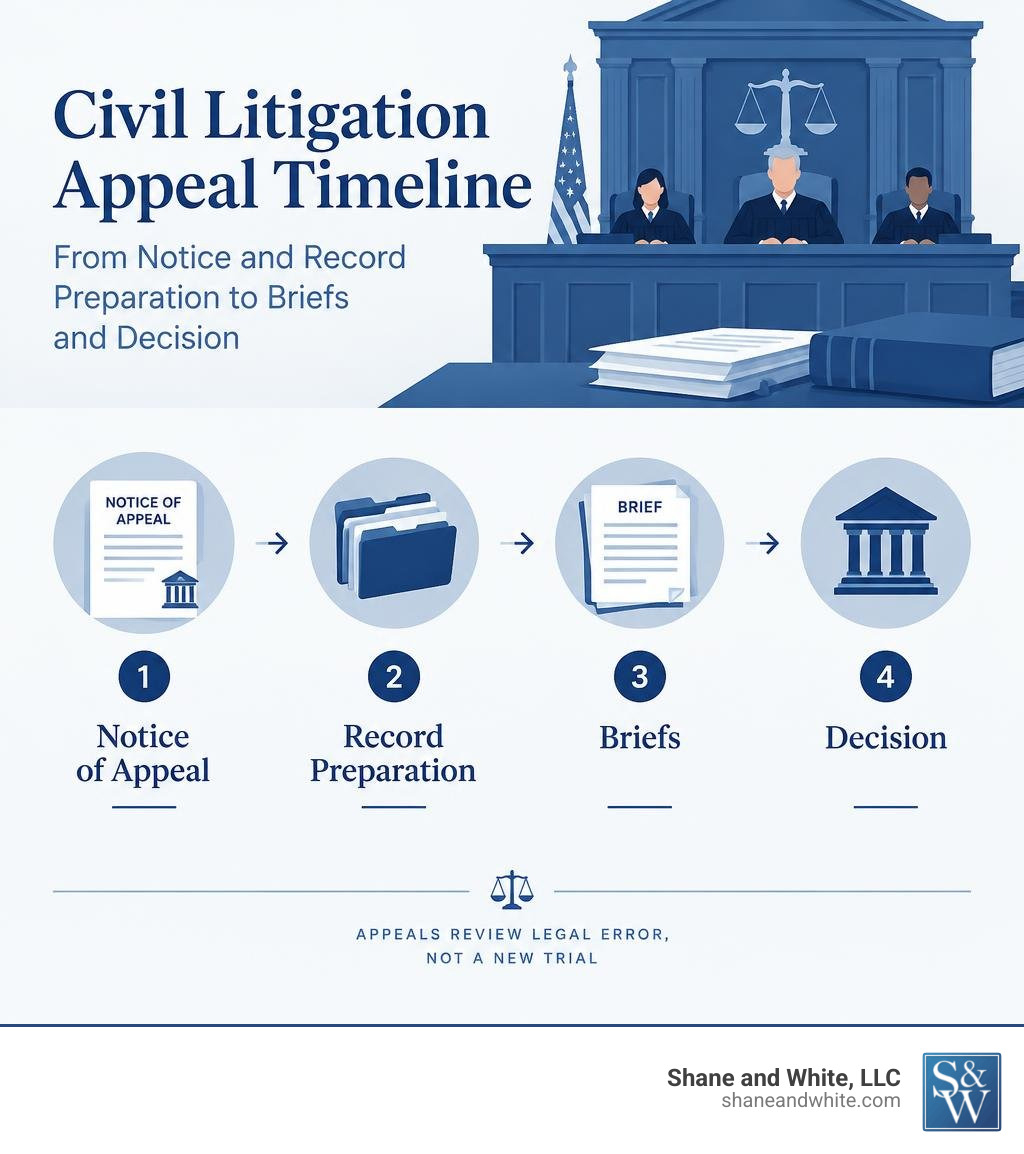
The process generally involves filing a notice of appeal, preparing the record, submitting written briefs, and waiting for the court’s decision. Some cases also include oral argument.
I’m Kenneth White, Esq., a New Jersey Supreme Court-certified matrimonial law attorney who has handled family court litigation as a trial attorney, mediator, and guardian ad litem. That experience helps me explain how the trial record shapes litigation appeals and what to consider before taking the next step.
Understanding Trial Courts vs. Appellate Courts in Litigation Appeals
To navigate an appeal effectively, you first need to understand the fundamental difference between a trial court and an appellate court. Many people believe an appeal is a “do-over” where you get to present your side of the story all over again, bring in new witnesses, or produce newly discovered evidence. In reality, trial courts and appellate courts perform completely distinct functions within the judicial system.
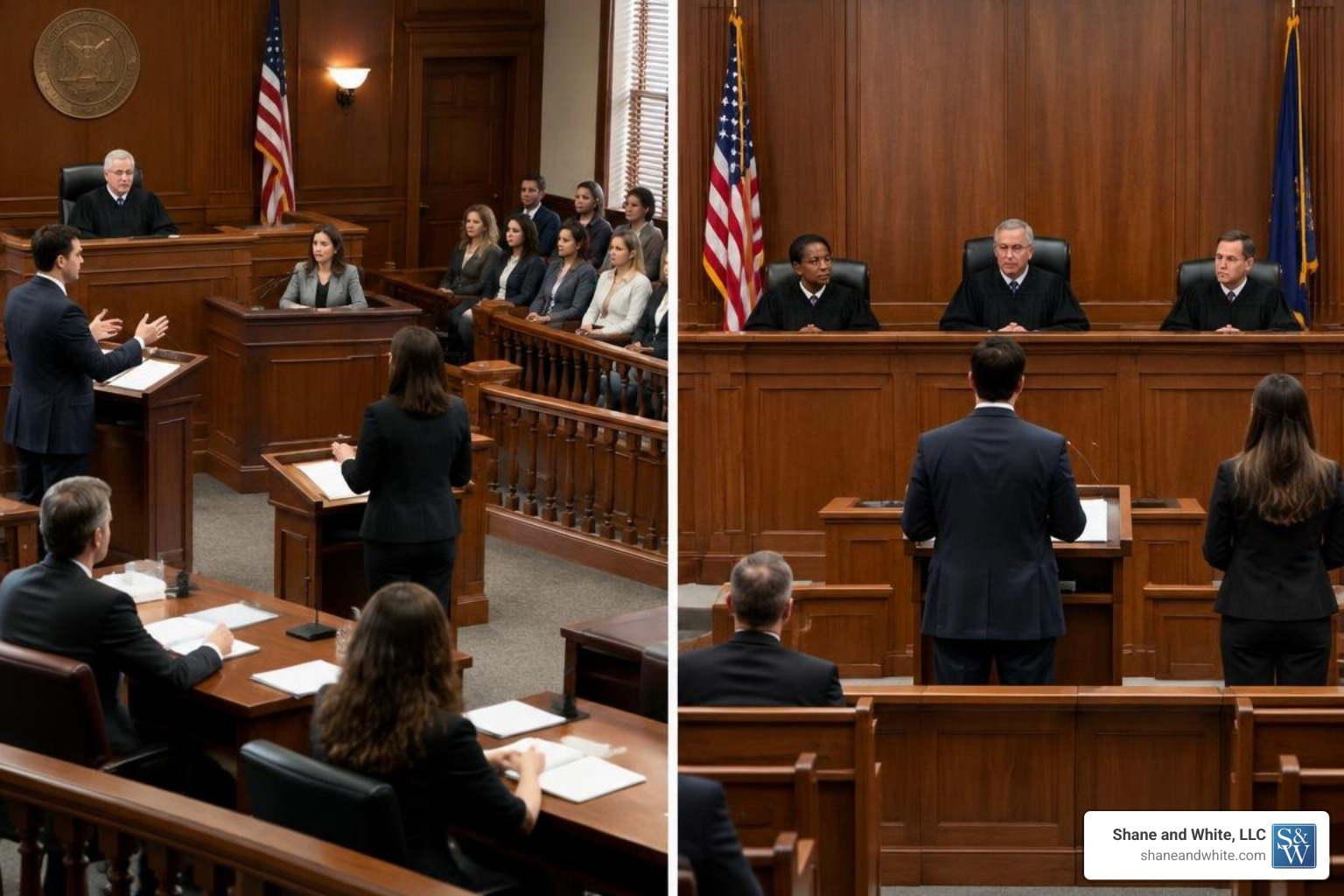
Trial courts are designed for fact-finding. This is where your original lawsuit, divorce hearing, or civil dispute takes place. In a trial court:
- Witnesses take the stand and provide live testimony under oath.
- Physical evidence, contracts, financial statements, and exhibits are introduced into the record.
- A judge or jury observes witness demeanor, weighs credibility, and determines what actually happened based on the evidence presented.
Appellate courts, on the other hand, operate purely as courts of review. They do not conduct trials, receive new exhibits, or hear live witness testimony. Instead, a panel of appellate judges reviews the existing trial court record to determine whether the trial judge committed prejudicial legal errors or abused their judicial discretion.
Appellate judges are bound strictly by what was said, filed, and decided in the trial court below—a concept known as the “record on appeal.” If an issue, objection, or document was not properly entered into the record during the trial court proceedings, the appellate court cannot consider it.
| Feature | Trial Court Proceedings | Appellate Court Proceedings |
|---|---|---|
| Primary Objective | Fact-finding and applying law to establish liability/relief | Reviewing legal proceedings to identify and correct errors |
| Presiding Authority | Single trial judge (or jury) | Multi-judge panel (usually 2 to 3 judges; full court for en banc) |
| Evidence & Testimony | Live witness testimony, cross-examinations, physical exhibits | Strict closed record; no new witnesses, affidavits, or exhibits |
| Key Presentation | Opening statements, witness examinations, closing arguments | In-depth written briefs and targeted oral argument questioning |
| Filing Requirements | Complaints, responsive pleadings, motions, pre-trial discovery | Notice of Appeal, transcripts, trial appendices, legal briefs |
Standards of Review in Litigation Appeals
When reviewing trial court rulings, appellate courts do not evaluate every issue the same way. Instead, they apply specific legal frameworks called standards of review. The applicable standard of review determines how much deference the appellate panel gives to the trial judge’s decisions:
- De Novo Review (No Deference): Under the de novo standard (Latin for “anew”), the appellate court examines pure questions of law without giving any deference to the trial court’s conclusions. This standard applies when interpreting statutes, state regulations, or contract enforceability. The appellate panel asks: Did the lower court correctly interpret and apply the law?
- Abuse of Discretion (High Deference): This standard applies to discretionary decisions made by trial judges, such as evidentiary rulings, discovery schedules, equitable distribution of assets, alimony awards, or child custody determinations. An appellate court will only reverse if the trial court’s decision was arbitrary, capricious, or unsupported by reasonable justification.
- Clearly Erroneous / Substantial Evidence (High Deference): When reviewing a trial judge’s factual findings, appellate courts will uphold those findings as long as there is substantial, credible evidence in the record to support them. Appellate judges will not re-weigh conflicting evidence simply because they might have reached a different conclusion.
Understanding these standards is vital when evaluating your chances of success. Appellate practitioners monitor administrative tools such as Track Appeals | NJ Courts to observe how appellate panels evaluate standards of review across various civil and family matters.
Preserving Issues for Appeal During Trial
An appeal is won or lost long before the final judgment is ever entered. To challenge an error on appeal, that issue must be strictly preserved on the record during the initial trial proceedings. If a trial attorney fails to make a timely objection or request a ruling, the appellate court will generally deem the issue waived.
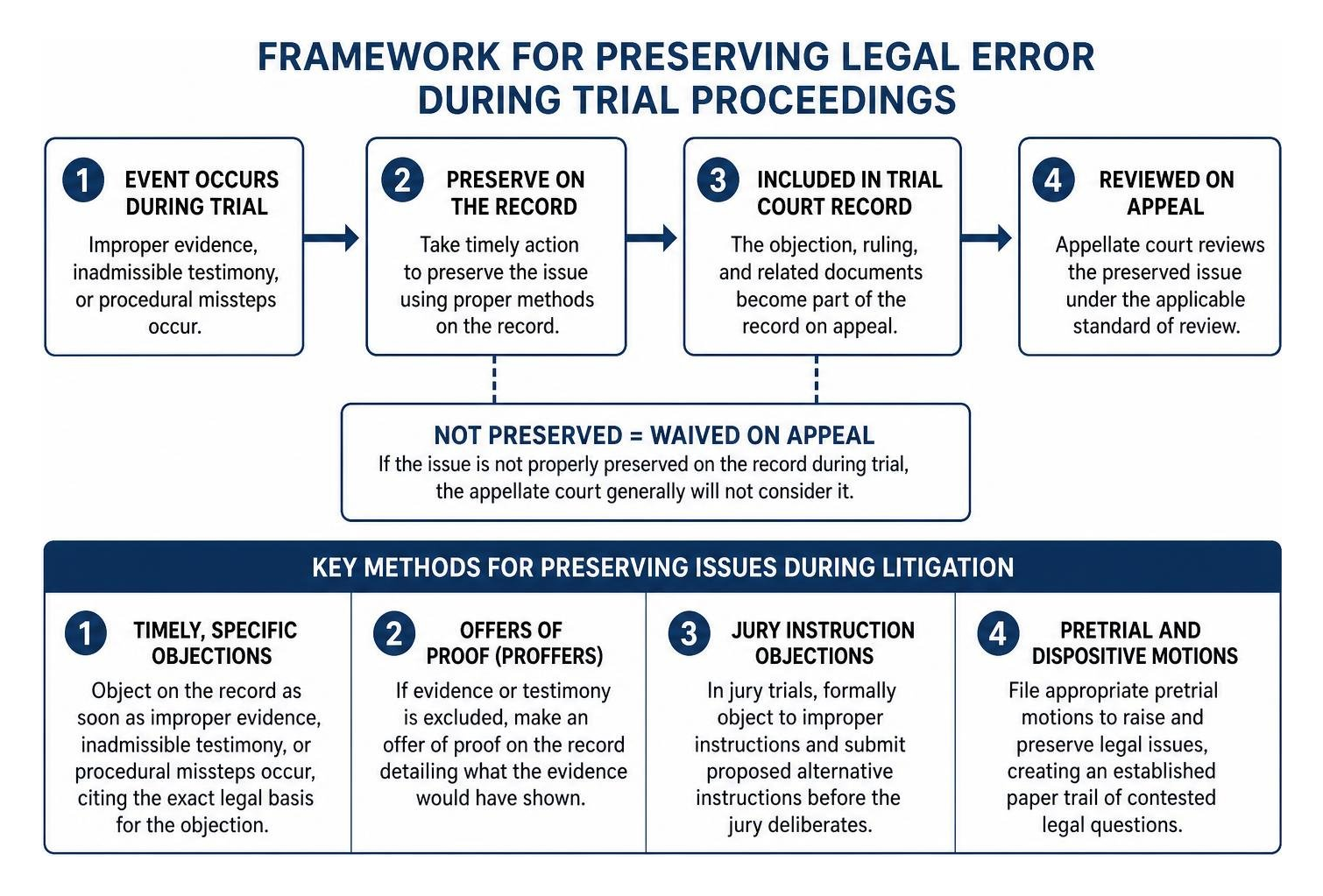
Key methods for preserving issues during litigation include:
- Timely, Specific Objections: Counsel must object on the record as soon as improper evidence, inadmissible testimony, or procedural missteps occur, citing the exact legal basis for the objection.
- Offers of Proof (Proffers): If a trial judge excludes crucial evidence or testimony, trial counsel must make an offer of proof on the record detailing what the evidence would have shown.
- Jury Instruction Objections: In jury trials, attorneys must formally object to improper instructions and submit proposed alternative instructions before the jury deliberates.
- Pretrial and Dispositive Motions: Properly filing appropriate pretrial motions creates an established paper trail of contested legal questions.
- Comprehensive Trial Preparation: Maintaining thorough documentation through structured court preparation strategies ensures every critical factual dispute is clearly reflected in the transcripts.
Grounds for Filing a Civil Appeal and Strategic Considerations
Losing a case at trial is emotionally difficult, but simply disagreeing with the judge’s ruling does not create a valid ground for an appeal. To secure a reversal or a remand, you must demonstrate that the lower court committed a reversible legal error that caused tangible prejudice to your case.

Common substantive grounds for filing a civil appeal include:
- Substantive Errors of Law: The trial judge misapplied a controlling statute, misinterpreted state binding precedent, or misconstrued contractual provisions.
- Prejudicial Procedural Errors: The court violated procedural rules, denied fundamental due process rights, or improper rulings on motion to dismiss rulings prejudiced a party’s ability to present their claim.
- Abuse of Discretion in Evidentiary Rulings: Inadmissible hearsay was improperly allowed, or crucial expert testimony was erroneously excluded, altering the outcome of the case.
- Lack of Substantial Evidence: The factual findings made by the judge or jury are completely unsupported by any credible evidence in the record.
Before pursuing an appeal, litigants must perform a rigorous cost-benefit analysis. Appeals require significant financial resources, extensive legal research, and substantial time commitments. Most civil appeals take between 6 and 18 months to reach a final resolution.
Appellants must also evaluate whether an appeal provides leverage for evaluating settlement opportunities. Often, the filing of an appeal encourages both sides to reconsider their positions and negotiate a mutually acceptable resolution rather than risking years of protracted appellate review.
Interlocutory Appeals and Critical Deadlines
The general rule in civil litigation is the Final Judgment Rule: parties can only appeal after a trial court enters a final order that resolves all claims and leaves nothing further for the court to decide.
However, there are critical exceptions where a party can seek an interlocutory appeal—an appeal of a temporary or non-final order while the broader case is still ongoing. Interlocutory appeals are tightly restricted and only permitted under specific statutory authorizations or court rules.
Common examples of appealable interlocutory orders include:
- Decisions granting or denying preliminary injunctions.
- Orders granting or denying motions to compel arbitration.
- Decisions denying claims of sovereign, qualified, or governmental immunity.
- Orders appointing a receiver or modifying temporary child custody arrangements under emergency provisions.
Deadlines for interlocutory review are exceptionally strict and significantly shorter than standard post-judgment appeals. While standard civil appeals typically allow 30 to 45 days from a final judgment, interlocutory motions for leave to appeal often require action within 15 to 20 days of the signed order. For example, specific procedural frameworks like the Pennsylvania Code outline precise rules for discretionary interlocutory appeals, cross-petitions, and fast-track filings. Missing an interlocutory filing window can permanently foreclose early appellate intervention.
Strategic Advantages of Retaining Dedicated Appellate Counsel
While many trial attorneys represent clients from initial complaints through trial verdicts, appellate advocacy requires a distinct legal skillset. The dynamics of persuading an appellate panel of judges differ greatly from presenting a compelling narrative to a jury or trial judge.
Partnering with an experienced appellate attorney provides key strategic benefits:
- Objective Case Assessment: An appellate attorney brings a fresh perspective to the case, unburdened by the emotional momentum or tunnel vision that can develop during trial.
- Specialized Brief Writing: Appellate success relies heavily on rigorous legal scholarship, statutory synthesis, and the ability to present complex procedural histories clearly.
- Appellate Bench Familiarity: Experienced appellate advocates understand how appellate panels evaluate oral argument, framing issues to directly address judges’ concerns regarding legal precedent.
- Trial Integration: In high-stakes matters, having appellate counsel collaborate with trial counsel before a verdict helps preserve errors and aligns trial litigation expectations with prospective appellate strategies.
The Step-by-Step Civil Appeals Process and Timeline
Filing an appeal is a structured, procedural journey. Failure to adhere strictly to court rules, formatting requirements, and jurisdictional deadlines can result in the immediate dismissal of your appeal.
The standard civil litigation appeal follows these sequential steps:
- Notice of Appeal and Case Information Statement: The appellant files the Notice of Appeal in the appropriate appellate division within the statutory deadline (typically within 45 days of final judgment in New Jersey state courts).
- Ordering Transcripts and Record Assembly: The appellant orders all official verbatim transcripts of court hearings, depositions, and trial proceedings. The trial court clerk compiles the formal record.
- Filing the Appellant’s Opening Brief and Appendix: The appellant prepares a comprehensive written brief and an appendix containing all relevant pleadings, exhibits, orders, and transcript excerpts.
- Filing the Appellee’s Response Brief: The responding party files a brief defending the trial court’s decision, demonstrating why the lower court’s ruling was legally sound.
- Filing the Appellant’s Reply Brief: The appellant may file an optional reply brief addressing only new legal arguments raised in the respondent’s brief.
- Oral Argument (If Granted): The court schedules oral arguments, where counsel presents legal arguments and answers targeted questions from the multi-judge panel.
- Issuance of Written Decision: The appellate panel deliberates and issues its formal written opinion.
Crafting Persuasive Briefs and Oral Arguments in Litigation Appeals
The appellate brief is the single most important document in any appeal. Because appellate judges decide many cases entirely on the papers without scheduling oral argument, your written submission must be clear, concise, and heavily supported by legal authority.
A persuasive brief begins with a precise framing of the questions presented. Effective advocates avoid vague or emotional assertions and instead structure arguments around applicable standards of review. Every factual statement must cite directly to the transcript page or appendix volume where the supporting evidence appears.
When the court grants oral argument, it is not a speech; it is a rapid-fire legal dialogue. Panels generally allocate 15 minutes per side. Judges interrupt with probing questions designed to test the limits of each party’s legal theories, probe inconsistencies, and understand how a ruling might impact future case law.
In exceptionally rare circumstances involving matters of immense public importance or conflicting panel decisions, a party may petition for an en banc review, requesting that all active judges of the appellate court rehear the case together.
Appellate Decisions and Post-Ruling Next Steps
Once the appellate court concludes its review, it issues a formal written opinion. The court generally reaches one of the following decisions:
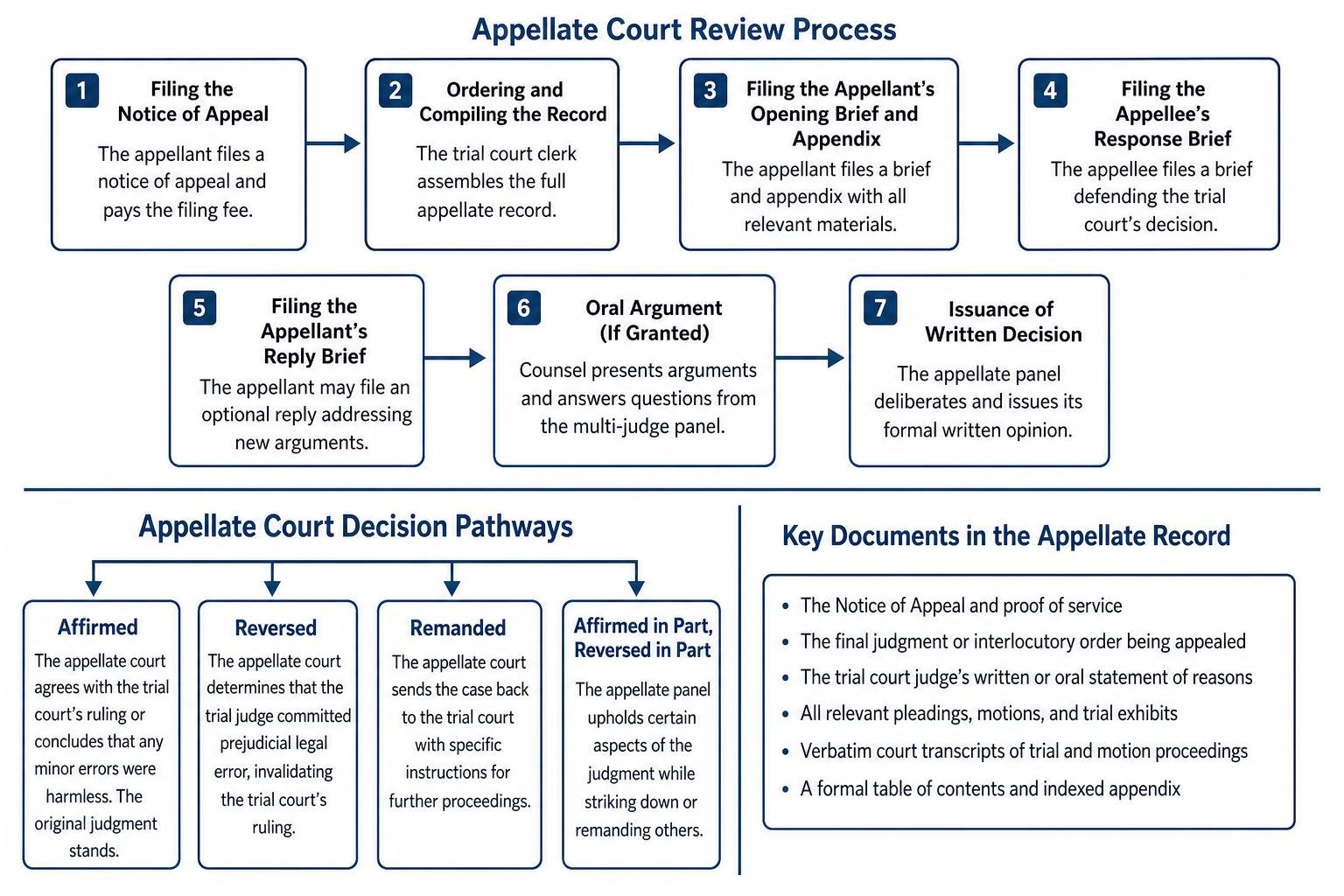
- Affirmed: The appellate court agrees with the trial court’s ruling or concludes that any minor errors were harmless. The original judgment stands.
- Reversed: The appellate court determines that the trial judge committed prejudicial legal error, invalidating the trial court’s ruling.
- Remanded: The appellate court sends the case back to the trial court with specific instructions. This may require the trial judge to reconsider specific evidence, recalculate financial awards, or conduct a new trial on particular issues.
- Affirmed in Part, Reversed in Part: The appellate panel upholds certain aspects of the judgment while striking down or remanding others.
If you receive an adverse appellate ruling, several procedural avenues remain. You may file a motion for reconsideration or petition the state supreme court for a petition for certification (or petition for a writ of certiorari in federal court). State supreme courts exercise discretionary jurisdiction, granting review primarily to matters of significant legal importance or novel constitutional questions. For many litigants, an appellate remand marks the next phase of trial court advocacy, setting the stage for ongoing litigation under the appellate court’s newly defined parameters.
Frequently Asked Questions about Civil Litigation Appeals
How long does a civil litigation appeal usually take from start to finish?
Most civil litigation appeals take between 6 and 18 months from the filing of the Notice of Appeal to the issuance of a written opinion. The timeline depends heavily on the time required to produce trial transcripts, briefing schedules, whether extensions are requested, and the appellate court’s case backlog. Expedited review is typically reserved for emergency matters, such as child safety determinations or urgent injunctive relief.
Can you introduce new evidence or call witnesses during an appeal?
No. Appellate courts strictly enforce the “closed record rule.” You cannot present new documents, introduce new witness testimony, or submit evidence that was not formally presented to the trial court prior to judgment. The appellate panel’s sole duty is to determine whether the trial judge committed legal error based exclusively on the record that existed at the time the ruling was made.
What happens if an appellate court remands a case back to the trial court?
When an appellate court remands a case, it returns jurisdiction to the lower court along with specific instructions outlined in its written opinion. The trial judge must adhere strictly to those instructions. Depending on the appellate directive, the trial court may hold a status conference, require supplemental briefing, conduct a partial retrial, or recalculate damages and financial awards in accordance with the appellate court’s guidance.
Conclusion
An appeal is not a routine continuation of trial litigation—it is a distinct, highly technical legal proceeding focused entirely on identifying and correcting legal errors. Successfully navigating an appeal requires a clear understanding of standards of review, meticulous preservation of the trial record, rigorous brief writing, and adherence to strict procedural timelines.
Whether you are seeking to challenge an erroneous trial court ruling or defending a hard-won victory against an adversary’s appeal, experienced legal guidance is critical. At Shane and White, LLC, we draw upon more than 40 years of litigation experience to evaluate trial records, identify appealable errors, and deliver clear, strategic advocacy.
If you need an objective assessment of your case or are facing an upcoming appellate deadline, explore our comprehensive litigation appeals representation or contact our Edison, New Jersey office to schedule a confidential consultation.