
Why Motion Practice Is the Engine of Every Lawsuit
Motion practice is the formal process by which parties in a lawsuit ask a court to make specific rulings or take specific actions — and it shapes the outcome of nearly every civil and family law case.
Quick answer:
| Question | Answer |
|---|---|
| What is it? | Filing written requests asking a judge to issue an order or ruling |
| Who files? | Either party — the one filing is called the “movant” |
| When does it happen? | At any stage: before, during, or after trial |
| Why does it matter? | It controls the pace, direction, and often the outcome of a case |
| Common examples | Motion to dismiss, motion for temporary support, motion to compel |
Whether you are just starting a divorce or already in the middle of contested litigation, motions are how you get the court involved when you need a decision. Courts rarely act on their own — a party must ask.
Think of it this way: the judge is the referee, and a motion is how you raise your hand to get a call made.
Filing the wrong motion at the wrong time — or missing a deadline — can seriously hurt your case. But used well, motions can protect your rights, secure temporary relief, and even resolve a dispute before it ever reaches trial.
I’m Kenneth White, Esq., a New Jersey Supreme Court Certified Matrimonial Attorney with decades of experience guiding clients through every aspect of motion practice in family court, from pendente lite applications to post-judgment enforcement. In the sections below, I’ll walk you through exactly how this process works and what you need to know to protect yourself.
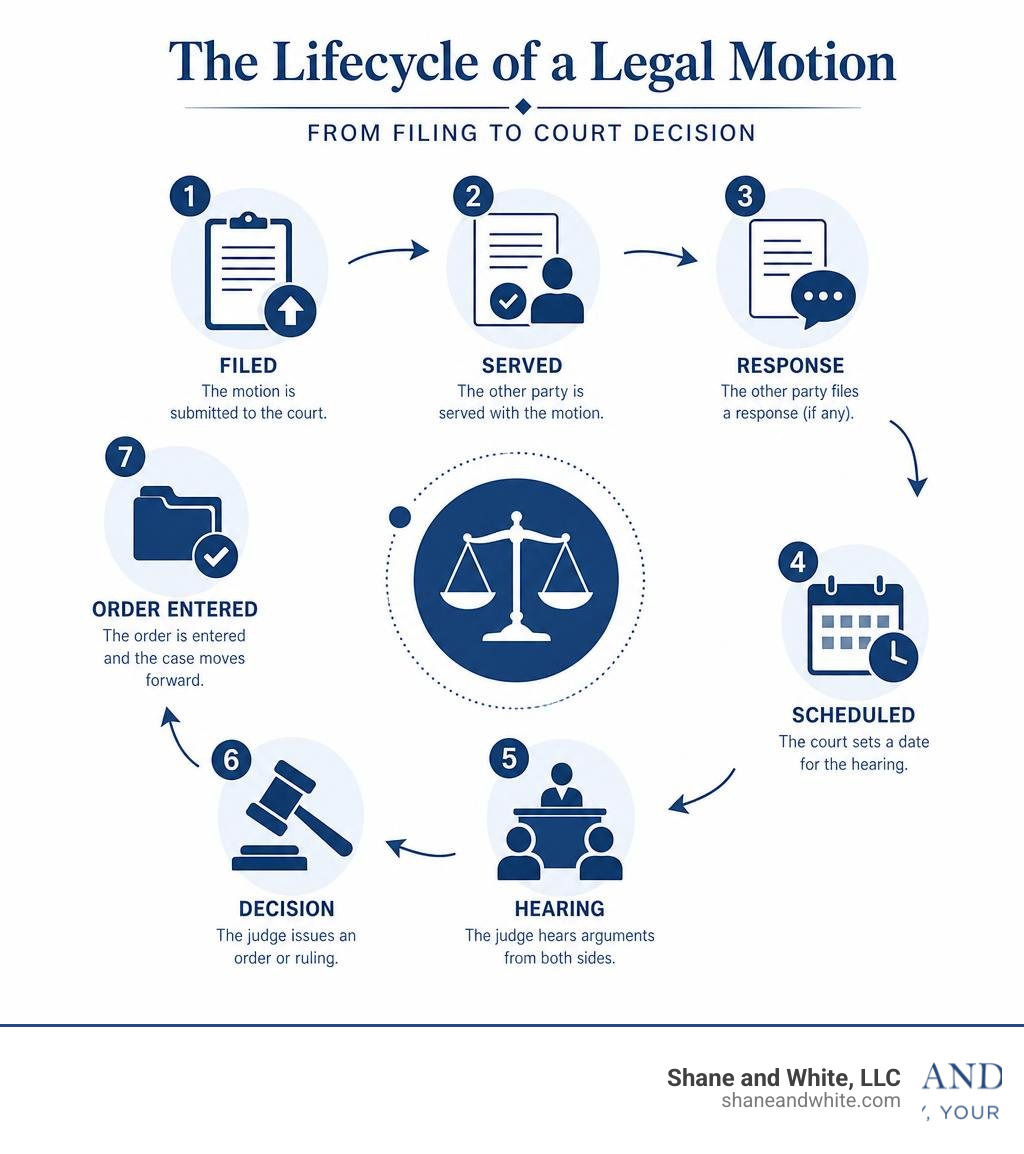
What is Motion Practice in Civil Litigation?

At its core, motion practice is the procedural arena where the daily battles of a lawsuit are fought. While television dramas focus almost entirely on dramatic trial confrontations, the reality of modern litigation is that most cases are shaped, steered, and frequently resolved through written motions.
In any legal dispute, a motion is a formal request asking a judge to issue an order. The party making the request is known as the “movant” or the moving party, while the opposing side is the “respondent” or non-moving party. Because the movant is the one asking the court to change the status quo or grant relief, they bear the burden of proof. This means they must present sufficient factual evidence and legal authority to convince the judge that their request is justified under the law. For a deeper look into the scholarly framework of these court applications, practitioners often consult resources like Motion Practice – vLex United States .
From a strategic perspective, motions are not merely administrative chores; they are powerful tools used to control the pace, direction, and scope of a lawsuit. For example, a well-timed motion can force an adversary to hand over hidden documents, narrow the legal issues in dispute, or even end the case entirely before a single witness takes the stand.
However, this power comes with significant responsibility. Courts have no patience for frivolous filings—motions filed solely to harass, delay, or drive up the opponent’s legal bills. Filing a groundless motion can backfire spectacularly, resulting in court-ordered sanctions, the dismissal of your claims, or a requirement that you pay the other party’s attorney fees.
As we often remind our clients at Shane and White, LLC, knowing When You Need the Judge to Decide an Issue File a Motion is key, but knowing when not to file is just as critical to a winning strategy.
Procedural Rules and Deadlines Governing Motion Practice
To succeed in court, you must play by the rules. Every jurisdiction has its own set of strict guidelines governing how, when, and where motions must be filed. Missing a deadline by even a single day can result in the court rejecting your paperwork entirely.
To give you an idea of how these rules function, let’s look at a comparative breakdown of motion deadlines across different jurisdictions, including the strict timelines used in Minnesota state courts as a point of reference:
| Jurisdiction / Rule Set | Motion Type | Moving Papers Deadline | Response Deadline | Reply Deadline | Page Limits |
|---|---|---|---|---|---|
| Minnesota (Rule 115) | Dispositive | 28 days before hearing | 14 days before hearing | 7 days before hearing | 35 pages (excluding facts) |
| Minnesota (Rule 115) | Nondispositive | 21 days before hearing | 14 days before hearing | 7 days before hearing | 35 pages (excluding facts) |
| New Jersey (Rule 1:6 / 5:5-4) | Family Court | 24 days before return date | 15 days before return date | 8 days before return date | 15 pages (standard family certifications) |
While states like New York operate under the Civil Practice Law and Rules (CPLR) and Minnesota utilizes its General Rules of Practice, our focus here in Middlesex County and Mercer County is governed strictly by the New Jersey Rules of Court.
In New Jersey family law matters, regular motions are heard on a bi-weekly Friday schedule known as the “return date.” Under this cycle:
- The moving party must file and serve their motion at least 24 days before the scheduled return date.
- The responding party must file and serve their opposition (and any cross-motions) at least 15 days before the return date.
- The moving party may file a reply to the opposition at least 8 days before the return date.
Filing your documents in the correct venue is also essential. For families in our local area, these filings are processed directly through local county offices, such as the Middlesex Court Offices/Divisions.
Best Practices for Drafting and Executing Motion Practice
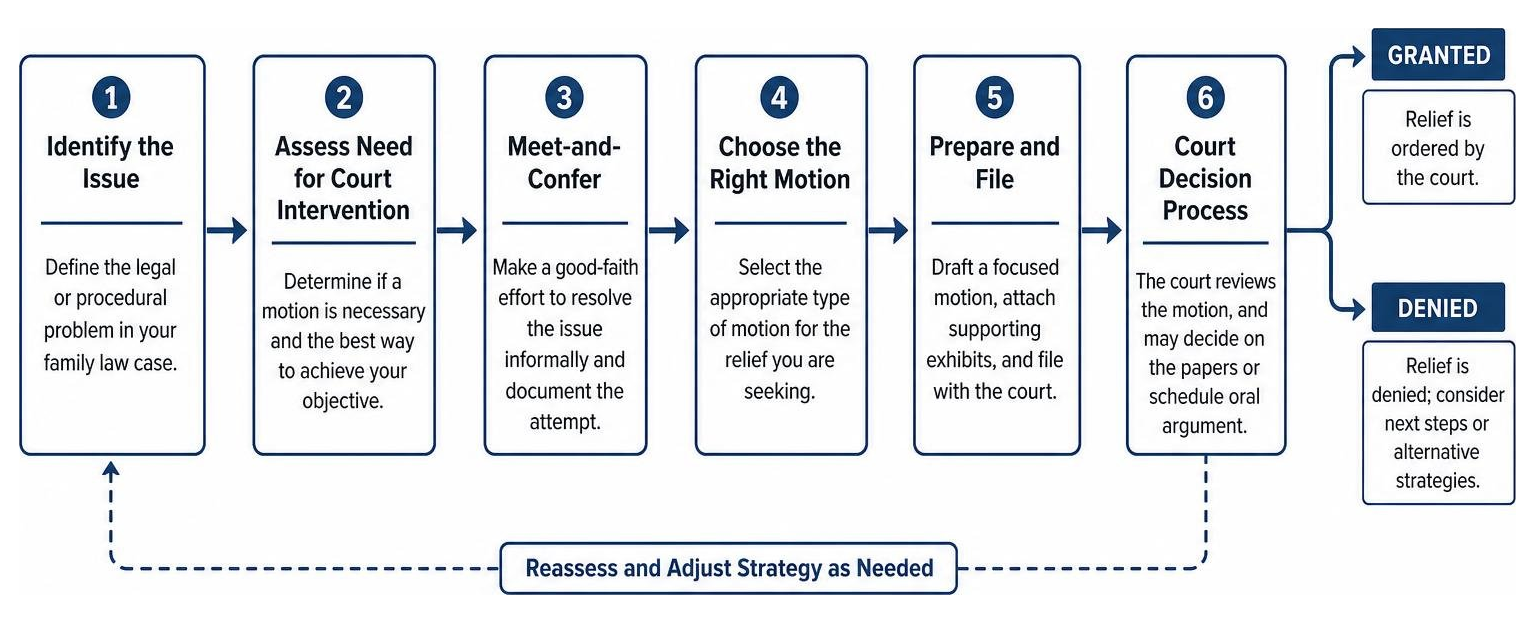
Drafting a motion is an art form. Because judges manage incredibly heavy caseloads, your written submissions must be clear, concise, and highly persuasive. To maximize your chances of success, keep these best practices in mind:
- Tell a Clear Story with Certifications: In New Jersey family court, your primary evidence is your written Certification. This is a formal statement signed under penalty of perjury. It must focus strictly on facts within your personal knowledge. Avoid legal arguments, hearsay, or emotional rants in your certification—save the legal analysis for your brief.
- Draft a Precise Proposed Order: Never overlook the Proposed Form of Order. This is the exact document you want the judge to sign. It should list every single piece of relief you are requesting in clear, numbered paragraphs. A poorly drafted proposed order makes it difficult for the judge to grant your requests.
- Keep Your Memorandum of Law Focused: Your legal brief should apply New Jersey statutory law and case precedents directly to the facts of your case. Avoid boilerplate language and get straight to the point.
- The “Meet-and-Confer” Requirement: Before filing any discovery or procedural motion, you are generally required to make a good-faith effort to resolve the dispute informally with your adversary. Certifying that you attempted to settle the issue before seeking court intervention is a mandatory step that judges take very seriously.
- Prepare for Oral Argument: While many routine civil motions are decided strictly “on the papers” without the parties appearing, family court motions frequently involve oral argument. Whether conducted in person, via Zoom, or through telephone hearings, always arrive prepared, maintain a professional tone, and avoid interrupting the judge or opposing counsel.
The Core Components and Types of Legal Motions

Understanding motion practice requires familiarizing yourself with the different types of motions available throughout the lifecycle of a lawsuit. Motions generally fall into four primary categories:
1. Preliminary Motions
Filed at the very beginning of a case, these motions address threshold issues. Common examples include a Motion to Dismiss (asking the court to throw out the complaint because of a lack of jurisdiction, improper service, or failure to state a legal claim) and applications for temporary injunctive relief.
2. Discovery Motions
During the active litigation phase, parties exchange evidence. If one side refuses to hand over financial documents, answer interrogatories, or sit for a deposition, the other party will file a Motion to Compel discovery. Conversely, if a party makes overly burdensome or abusive demands, the opposing side may file a Motion for a Protective Order.
3. Dispositive Motions
These are high-stakes applications designed to end some or all of the legal claims without going to trial. The most common is a Motion for Summary Judgment, which argues that because there are no genuine disputes over the key facts of the case, the moving party is entitled to win as a matter of law.
4. Post-Trial Motions
Even after a trial concludes, motion practice continues. Parties may file motions for a new trial, motions to award attorney fees, or motions to stay (pause) the enforcement of a judgment pending an appeal. If your case is heading toward this stage, it helps to understand what lies ahead by reading our guide: My Case is Going to Trial What Should I Expect.
Strategic Decision-Making and Family Law Applications
Deciding whether to file a motion requires careful strategic analysis. It is easy to let emotions drive litigation, but every motion carries financial and emotional costs. Before moving forward, we help our clients perform a thorough cost-benefit analysis:
In family law, motions are highly specialized. Unlike general civil cases where money damages are the primary focus, family court motions deal with human relationships, children, and daily survival.
When you are Setting the Stage for Your Divorce Litigation, the very first motion filed is often a Pendente Lite Motion. “Pendente lite” is Latin for “pending the litigation.” Because a divorce can take many months (or even years) to finalize, families need immediate ground rules. A pendente lite motion asks the court to establish temporary orders for child custody, parenting time, child support, spousal maintenance (alimony), and who pays the marital mortgage or health insurance premiums while the case is active.
Later, if a spouse refuses to follow a court order or violates the terms of a signed Marital Settlement Agreement, we must file an Enforcement Motion (often called a Motion to Enforce Litigant’s Rights) to compel compliance, request financial sanctions, or seek the suspension of licenses.
In true emergencies—such as parental kidnapping, immediate threats of child abuse, or the sudden draining of marital bank accounts—we bypass the standard 24-day motion cycle by filing an emergency application known as an Order to Show Cause. However, the court sets an incredibly high bar for what qualifies as an actual emergency. To understand this distinction, read our detailed breakdown on What is and is not an Emergency.
To put this in perspective, think of your legal strategy as a carefully managed system. When you need physical rehabilitation, you go to a specialist like E-MOTION PHYSICAL THERAPY & WELLNESS . When you need medical care, you seek out regional facilities like HMH JFK Family Practice Center in Edison or Family Practice of CentraState – East Windsor . Similarly, when your financial stability or parental rights are on the line, you need a dedicated legal family practice to handle your motions.
Frequently Asked Questions About Legal Motions
What is the difference between a dispositive and a nondispositive motion?
A dispositive motion has the power to resolve and close a claim, a party’s involvement, or the entire lawsuit. Examples include a motion to dismiss or a motion for summary judgment. A nondispositive motion addresses intermediate, procedural issues that arise along the way—such as discovery disputes, requests for extensions of time, or motions to amend pleadings—without ending the case.
Can you file a motion to reconsider a judge’s decision?
Yes, but they are incredibly difficult to win. Under New Jersey rules (such as Rule 4:49-2), motions to reconsider are strictly limited. You cannot simply file one because you are unhappy with the judge’s decision. Instead, you must show compelling circumstances—specifically, that the court’s ruling was based on a palpably incorrect basis, failed to consider significant evidence, or that new, previously unavailable evidence has come to light.
How long do you have to respond to a motion in New Jersey?
In New Jersey family court, once you are served with a formal motion, you have a strict 15-day window before the return date to file your written opposition and any cross-motions. Because this timeline is tight and requires drafting comprehensive certifications and legal arguments, you should contact an attorney immediately if you are served with motion papers.
Conclusion: Partner with a Trusted New Jersey Family Law Advocate
Navigating motion practice requires a deep understanding of court rules, strategic patience, and exceptional drafting skills. At Shane and White, LLC, located in Edison, New Jersey, we bring more than 40 years of matrimonial law experience to the table. We believe in providing personalized attention, realistic advice, and clear, compassionate communication through every step of your case.
If you are facing a family law dispute in Middlesex County, Mercer County, or the surrounding New Jersey areas, don’t go it alone. Contact us today to schedule a consultation, and let us help you build a strong, effective strategy for your litigation.
Ready to take the next step? Learn more about your options by reading: When You Need the Judge to Decide an Issue File a Motion.